DHJ Quick Take: Choosing a Direction
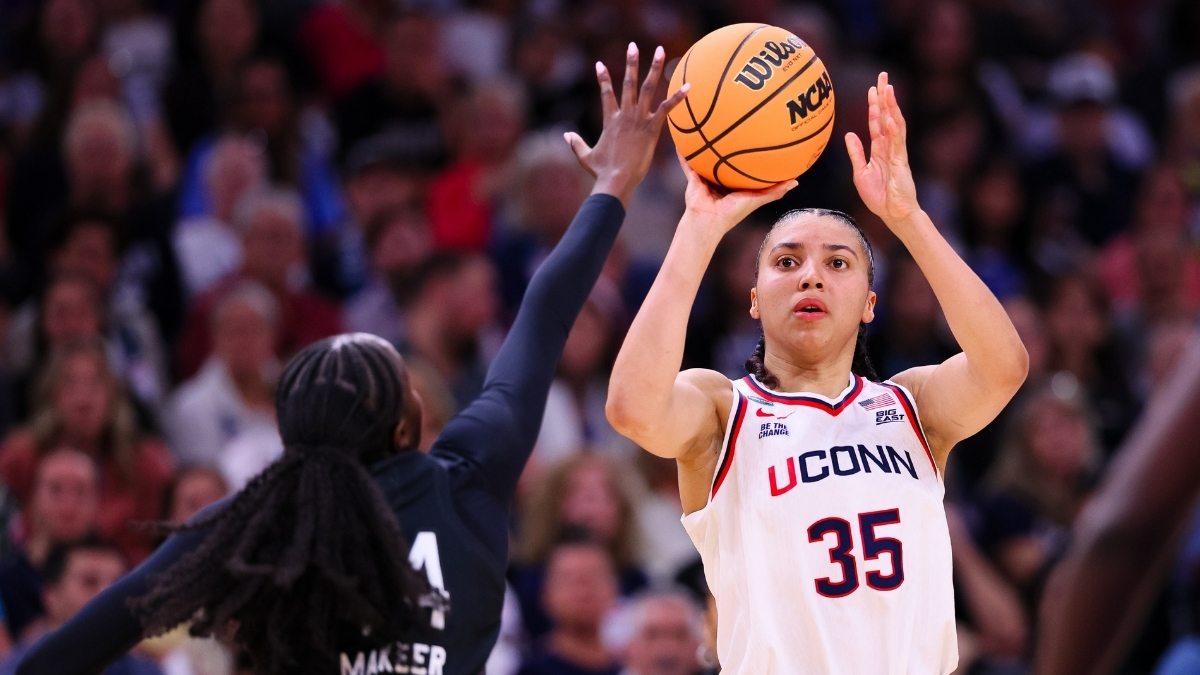
- The Case for Fudd: If Dallas wants to fix their league-worst three-point volume immediately, Azzi Fudd is the answer. Her 44.5% clip from deep and “championship DNA” with Paige Bueckers at UConn offers a seamless offensive fit that maximizes the gravity of Arike Ogunbowale.
- The Case for Betts: Lauren Betts is the ultimate “force multiplier.” Pairing the UCLA star’s 6-foot-7 frame and 69.9% rim finishing with reigning Co-DPOY Alanna Smith would give Arlington a defensive frontline that mirrors the great “Twin Towers” eras of the past.
- The Case for Miles: Olivia Miles is a triple-double machine who ranked in the 100th percentile for pick-and-roll usage. While her ball-dominant style at TCU presents fit questions next to Ogunbowale, her elite passing could turn the Wings into the most sophisticated offense in the league.
- The Case for Fam: At just 19 years old, Awa Fam represents the highest long-term ceiling. Her experience with Valencia and the Spanish national team aligns with the Wings‘ heavy investment in high-IQ, international talent like Awak Kuier and Li Yueru.
ARLINGTON, Texas — The Dallas Wings face a consequential decision with the No. 1 overall selection in the 2026 WNBA Draft on Monday; general manager Curt Miller and head coach Jose Fernandez must choose which direction they want this franchise to take.
The Wings have already been busy making roster moves this offseason. Dallas re-signed Arike Ogunbowale to a multi-year extension, signed Alanna Smith to a three-year max deal, added veteran big Jessica Shepard, and brought back Awak Kuier — all before Monday’s draft.
The next question is what happens when the Wings make a selection with the No. 1 pick.
Leading into the draft, there are four players who have been slotted in at No. 1 overall in WNBA mock drafts in recent weeks, including UConn guard Azzi Fudd, Valencia center Awa Fam, UCLA center Lauren Betts, and TCU point guard Olivia Miles.
Back in November, after the Wings won the WNBA Draft Lottery, Miller shared his initial perspective on the options in this year’s class with the No. 1 overall pick. He said that “six prospects” have “really separated” from the rest of the group as potential options.
“There are six prospects that have really separated,” Miller told Dallas Hoops Journal. “It covers the gamut. You have a great passer and leader at point guard. One of the best shooters with one of the fastest releases. A transition player who thrives in the full court. A big-time scorer who’s led the nation. Two post players projected in the top six. An international young phenom who is still 19. Lauren Betts with her size at UCLA.”
Here’s a breakdown of every option.
Azzi Fudd, Guard, UConn
The logic writes itself. Azzi Fudd and Paige Bueckers won a national championship together at UConn in 2025, and Diana Taurasi has said publicly that reuniting them in Dallas would give the Wings “championship DNA.” It’s a proven concept that both players can achieve results as a backcourt pairing.
Fudd averaged a career-best 17.3 points per game this season, shooting 44.7% on 6.7 three-point attempts per game. She is the best pure shooter in this draft class, and her value as a motion scorer unlocks a dimension of half-court offense Dallas simply does not have right now. According to Synergy Sports data, Fudd posted a 1.150 points-per-possession (PPP) mark off screens last season — 90th percentile, rated Excellent — across 18.4% of her offensive possessions. Her spot-up efficiency was even sharper: 1.210 PPP at the 97th percentile. Those numbers reflect a player who can get buckets without the ball against the best competition in college basketball.
What makes her dangerous isn’t just the shot — it’s the variety of ways a coaching staff can manufacture it. Teams can run Fudd off staggers, flares, floppy actions, and pin-ins. She shot 44.5% from three on 263 attempts last season, rated Excellent at the 98th percentile by Synergy. Crucially, that production held up even when defenders knew it was coming: her guarded catch-and-shoot PPP was 1.21 — 94th percentile — meaning she doesn’t need a clean look to be a problem. In a Dallas offense already built around Bueckers and Ogunbowale commanding defensive attention, Fudd becomes a back-screener in Stack pick-and-roll sets, a weak-side decoy when defenses top-lock the primary ball handler, and an inbounds option who demands respect without the ball even leaving the passer’s hands. That off-ball gravity creates driving lanes. It also creates open threes when help defenders choose the wrong assignment.
Her value as a pick-and-roll ball handler adds another layer that often gets overlooked in the shooting-first conversation. Fudd logged 117 pick-and-roll ball-handler possessions last season, generating 0.906 PPP overall — 84th percentile, Excellent — including a 1.037 PPP mark at the 93rd percentile when defenses committed hard to the screen. She punishes drop coverage by retreating behind the arc for a pull-up and attacks on-ball defenders who fight over screens by settling near the elbow for a pull-up jumper. In a lineup where top defenders will be assigned to Bueckers and Ogunbowale for 40 minutes, having a third reliable threat who can score efficiently in the gaps of a defense raises the floor of the entire offense.
There is also a team-level context that sharpens the case. The Wings ranked last in the league in three-point attempts last season, launching just 21.6 per game while connecting on 30.4% of them — also among the worst marks in the WNBA. The league-leading Minnesota Lynx attempted 25.4 threes per game and converted at 37.8%. That gap in volume and efficiency is significant and won’t close without personnel changes. Adding a player who shot 44.5% from three on 263 attempts last season addresses one of Dallas’ most glaring structural weaknesses on day one.
She is also more than a willing defensive participant — an underrated qualifier for any guard taken at No. 1. Bueckers’ size at the wing allows her to guard multiple spots, and Fudd’s activity on that end means the Wings wouldn’t be hiding a liability. If Dallas wants to go three-guard with a versatile frontcourt, the defensive exposure is more manageable than the skeptics suggest. Although there is still some natural size concession against opposing teams with bigger lineups.
There is also an intangible worth noting: head coach Jose Fernandez spent years at USF competing in the Big East against UConn. He knows Fudd’s game. He knows Bueckers’ game. And with Maddy Siegrist — a Villanova product — already in the locker room, the Wings would have a roster with deep Big East basketball roots. The chemistry-building process with new teammates still takes time, but Fudd’s skill set complements any personnel around her.
The larger question concerns the philosophy behind how the Wings want to build their team. If Dallas wants Bueckers to frequently handle the ball as the initiator, Fudd would be a logical option to maximize floor spacing. The options are there, considering Bueckers is exceptional as a point guard and as an off-ball player.
What we do know traces back to something Miller shared with Dallas Hoops Journal in August, when discussing what the Wings learned building around Bueckers in her rookie year.
“Paige’s efficiency and versatility give us a lot of flexibility in roster construction,” Miller told Dallas Hoops Journal. “She enjoys being off the ball and then brought back into actions, not worn down by defensive point guards pressuring her full court. She works well with a true point guard…”
Miller also noted that Bueckers’ ability to shift between primary scorer and secondary playmaker gives Dallas room to adjust game plans mid-possession, not just between games.
“At the same time, Paige can be on the ball in bigger lineups, allowing for some big-guard looks,” Miller told Dallas Hoops Journal. “The culture in the locker room is also important. Our players are genuinely close, which is rare for a losing team. We intentionally put great humans in that room, but now we need to raise our talent level.”
Miller’s emphasis on big-guard versatility and raising the talent level could just as easily support the case for Fudd. Ogunbowale spent significant stretches of last season operating off the ball to begin possessions while Bueckers ran the offense. As the season progressed, Dallas also experimented with three-guard lineups featuring Grace Berger alongside both stars, allowing Bueckers to play more off the ball.
For a seamless fit and sharpshooting, Fudd checks a lot of boxes. The basketball case is easy to make.
Lauren Betts, Center, UCLA
Lauren Betts enters Monday night with an incredible résumé. She led UCLA to the national championship and was named Most Outstanding Player of the NCAA Tournament. In both 2025 and 2026, she was an AP All-America First Team pick, the Lisa Leslie Award winner as the nation’s best center, and the Big Ten Defensive Player of the Year. This season, she averaged 17.1 points and 8.8 rebounds.
That’s elite production against elite competition, and the Synergy data behind it is just as striking. Betts posted a 1.065 PPP in post-up situations last season — 89th percentile, rated Excellent — across 337 possessions, the second-highest share of her offensive diet at 55.8% of her time. When defenses committed hard and sent double teams, she still generated 1.055 PPP at the 88th percentile. She finished at the rim on 64.6% of her shot attempts, converting at a 69.9% clip — 98th percentile, Excellent — and she was equally dangerous as a cutter (1.250 PPP, 83rd percentile) and roll man (1.125 PPP, 81st percentile). It’s difficult to argue against a team if they want to select a player like Betts with the first pick.
What the numbers don’t capture is how Betts responds when things go wrong. UCLA’s only loss of the season came against Texas, and Betts made clear it left a mark.
“That was a really big turning point for our team,” Betts told reporters at a Raising Cane’s event in Los Angeles that Dallas Hoops Journal attended while covering the Dallas Mavericks on the road. “We learned a lot about how we need to come out, how we need to start games, and the mentality that we need to have — being aggressive from the very beginning. Once we played them again, we were not going to take it easy on them from the very beginning. I think we all just needed a little reset, and that pushed us.”
That mentality extends to the practice floor. Betts described a culture of daily accountability that helps explain why UCLA’s trust held under tournament pressure.
“We push each other every single day. We hold each other accountable. We’re all very competitive, and we don’t take it easy on each other,” Betts said. “When big games happen, the trust that you’ve built over time just shows.”
The common case against Betts isn’t a mystery. At a towering height of 6-foot-7, Betts would’ve been better served by entering the WNBA a decade ago, when traditional bigs such as Tina Charles, Brittney Griner, and Sylvia Fowles were offensive hubs. Because she’s not a modern stretch-5, Betts might be a classic case of overthinking a prospect. Her three-point range is limited, and the WNBA’s drift toward positionless, pace-and-space basketball creates real questions about her offensive ceiling at the next level.
Betts, for her part, seems clear-eyed about exactly what the critics are saying.
“It’s about continuing to work on my skills there, preparing my one-on-one game, trying to spread the floor a little bit more if I can, and continuing to grow in all aspects,” Betts said. “Defensively, that’s going to be really key for me — being able to switch out on guards. That’s something I take a lot of pride in, so just continuing to stay mobile and keep working on that.”
A towering center who acknowledges the floor-spacing gap and takes pride in switching onto guards is a different prospect than the post players who played in a previous era.
The main question is what the Wings envision for the frontcourt at this stage. Adding the reigning co-Defensive Player of the Year, Alanna Smith, who played a lot of minutes as a center for Minnesota, could naturally change the calculus. What makes the Smith acquisition especially intriguing in this scenario is that she can also play heavy minutes at the four if a team wants to deploy a bigger defensive frontcourt to maximize size. Alongside a talent like Betts, that would form a towering frontcourt. However, if Smith is viewed as ideal to play at center to maximize versatility, then other options are cleaner fits.
The team context adds another layer worth examining. Dallas played at the second-fastest pace in the league last season at 96.34 possessions per 40 minutes, and the previous coaching staff rarely featured post-up-heavy sets as a primary source of offense. Betts’ fit depends in part on whether Fernandez — who inherits a different personnel set and brings his own offensive philosophy from USF — wants to slow things down and build around an interior hub, or continue pushing pace and operating with a big man who functions more as a screener, cutter, and rim-runner than a post scorer.
The defensive picture is also instructive. Dallas allowed 0.986 PPP overall last season — 0th percentile, rated Poor by Synergy — with particularly brutal numbers against spot-up shooters, surrendering 1.106 PPP at the 0th percentile on 870 spot-up possessions. Rim protection was a genuine vulnerability. Dallas allowed 1.13 PPS at the rim last season — 50th percentile, rated Average — on 1,150 possessions, a figure that reflects how often opponents got easy looks inside without a credible deterrent. Betts’ presence changes that math immediately.
Awa Fam, Center, Valencia (Spain)
For most of this draft cycle, Awa Fam has emerged as a viable option to be selected near the top of the draft. Multiple major outlets have projected her to Dallas at No. 1 at various points. Three years younger than most of her draft-class peers, Fam and her two-way skill set make her an intriguing prospect for front offices to consider for long-term upside.
Fam, a 6-foot-4 center, has played professionally with Valencia Basket of Spain’s Liga Femenina de Baloncesto, debuting with the club at age 15 in December 2021. She will turn 20 on June 17. At the FIBA Women’s EuroBasket 2025, she averaged 8.7 points, 4.2 rebounds, and 2.3 assists against WNBA-caliber competition.
What makes Fam special isn’t her current numbers. It’s her ceiling. She is long, athletic, and already a credible two-way presence against professional competition in Europe. A year after France’s Dominique Malonga went No. 2 overall to the Seattle Storm, Fam being first or second would further symbolize the shift toward the WNBA embracing position-less, athletic bigs.
Wings coach Jose Fernandez, who oversaw significant overseas recruiting at USF, would be very familiar with working with Fam. That relationship-building experience matters when integrating a teenager from a European league into a professional American roster.
The wrinkle: the Wings just signed Alanna Smith, Jessica Shepard, and Awak Kuier, adding frontcourt depth before the draft in addition to already retaining Li Yueru. After a two-year absence, the team is bringing back Kuier. At 6-foot-4, Fam can play multiple positions, but likely has her best impact at the WNBA level as a center, where her versatility is most on display. However, alongside Smith, both players are quite versatile and could likely fit well together.
Regardless, the case against overstating the options already on the roster comes back to the classic thought process of not allowing depth players to dictate a monumental decision like the No. 1 overall pick. Making changes to balance the roster would not be challenging if that were the route preferred.
It could take time for a player who will turn 20 during the WNBA season to fully acclimate and make a dynamic impact on a team that wants to compete for the playoffs immediately.
Olivia Miles, Guard, TCU
Olivia Miles is the wild card — and she’s surged up draft boards after a dominant regular season and NCAA Tournament run. The 5-10 guard led the nation in triple-doubles (6) and ranked seventh in assists per game (6.6). The Big 12 Player of the Year, Miles became the first NCAA player to average at least 19 points, 7 rebounds, 6 assists, and 1.5 steals per game.
The Synergy data backs the hype. Miles ran pick-and-roll as the ball handler on 52.1% of her offensive possessions last season — 100th percentile in time usage — generating 0.965 PPP at the 94th percentile, rated Excellent. When defenses committed hard to the screen, she posted 1.054 PPP at the 94th percentile. Including passes out of ball-handler actions, that number climbed to 1.090 PPP at the 97th percentile across 714 possessions. She was equally dangerous in isolation — 1.078 PPP at the 91st percentile — and punished teams that fully committed to stopping her drive with 1.235 PPP at the 95th percentile when defenses sold out. She can run an offense. That much is not in question.
The counter-argument to Miles at No. 1 isn’t about talent — it’s about roster fit. Ogunbowale is back. Deploying Miles alongside Bueckers and Ogunbowale adds a new guard into the mix that you would ideally put on a weaker offensive player, leaving a void for an on-ball stopper. Miles also showed real limitations on defense at the collegiate level, a concern that doesn’t disappear when the competition improves.
Another open question is how Miles translates as an off-ball player — a role she would need to embrace in Dallas more than she ever did at TCU. Her spot-up numbers were promising in a limited sample: 1.074 PPP at the 91st percentile, rated Excellent. But spot-up possessions accounted for just 10.5% of her offensive time last season, compared to 52.1% as a pick-and-roll ball handler. She rarely had to operate without the ball at TCU because she was the engine of everything. In Dallas, sharing the floor with Bueckers and Ogunbowale would likely demand a meaningful adjustment — less creation, more movement, and a greater willingness to receive and shoot in rhythm rather than initiate.
The Wings would be stacking playmakers, and for a team that already needs to improve the fit between Bueckers and Ogunbowale, adding a ball-dominant player to the mix could complicate the process. Doing so would likely require patience and the belief that Miles’ elite passing would make it easier for Bueckers and Ogunbowale to score, while making the offense even harder for a team to solve.
Miles is the most recent player to sit atop ESPN’s mock draft, with the outlet noting she’s ball-dominant but could work well with Bueckers, who can be effective moving without the ball. If the goal is to add a player who creates in pick-and-roll, scores in isolation, and runs an offense from the jump, Miles fits that philosophy. If the goal is to maximize shooting and on-ball perimeter defense alongside Bueckers, Fudd is the obvious fit for a guard.
The Bottom Line
Miller said it plainly after the lottery: the Wings need to raise the talent level. The culture is there. The foundation is there. Now comes a player who will help define this team alongside Paige Bueckers.
Miller and Fernandez have studied this class for months. On Monday, they will reveal to the basketball world what conclusion they reached regarding the best course of action.
From the outside looking in, if Dallas wants an immediate offensive weapon who cleanly fits the roster on day one, Azzi Fudd is a great answer. She brings shooting to a team that sorely struggled to knock down open looks, while making it easier for her teammates to get to their spots to make plays.
If the priority is a two-way big with a high long-term ceiling, Awa Fam is a logical pick. If the belief is that interior production translates to an improved team, Lauren Betts makes the case on her own. And if the vision is a playmaker capable of creating for others at the highest level, Olivia Miles presents that argument — with the understanding that the roster fit requires patience.
The WNBA Draft broadcast begins on Monday, April 13, 2026, at 6 p.m. CT on ESPN.
More Wings & WNBA Coverage on Dallas Hoops Journal
- Dallas Wings Sign Four To Training Camp Contracts, Including Amy Okonkwo
- ‘Positioned To Be Very Aggressive’: How Dallas Wings Executed Curt Miller’s Vision Laid For Offseason Moves
- ‘Our Top Target’: Dallas Wings Sign Reigning WNBA Co-Defensive Player Of The Year Alanna Smith To Three-Year Max Deal
- ‘A Huge Priority’: Curt Miller Details Why Dallas Wings Brought Back Center Awak Kuier
- Curt Miller Praises Arike Ogunbowale’s ‘Undeniable’ Commitment To Dallas Wings, Details Re-Signing All-Time Scoring Leader
- ‘High Basketball IQ’: Curt Miller Details Why Jessica Shepard Was A Free-Agent Priority For The Dallas Wings
- Sources: Dallas Wings Agree To Multi-Year Deal With Jessica Shepard In WNBA Free Agency
- Sources: Arike Ogunbowale Re-Signing With Dallas Wings On Historic Multi-Year Deal
- Sources: Dallas Wings Re-Signing Awak Kuier After Overseas Development
- Dallas Wings Trade Diamond Miller To Connecticut Sun, Acquire Rayah Marshall In Salary-Clearing Move
- Portland Fire Select Luisa Geiselsöder, Haley Jones From Dallas Wings In 2026 WNBA Expansion Draft