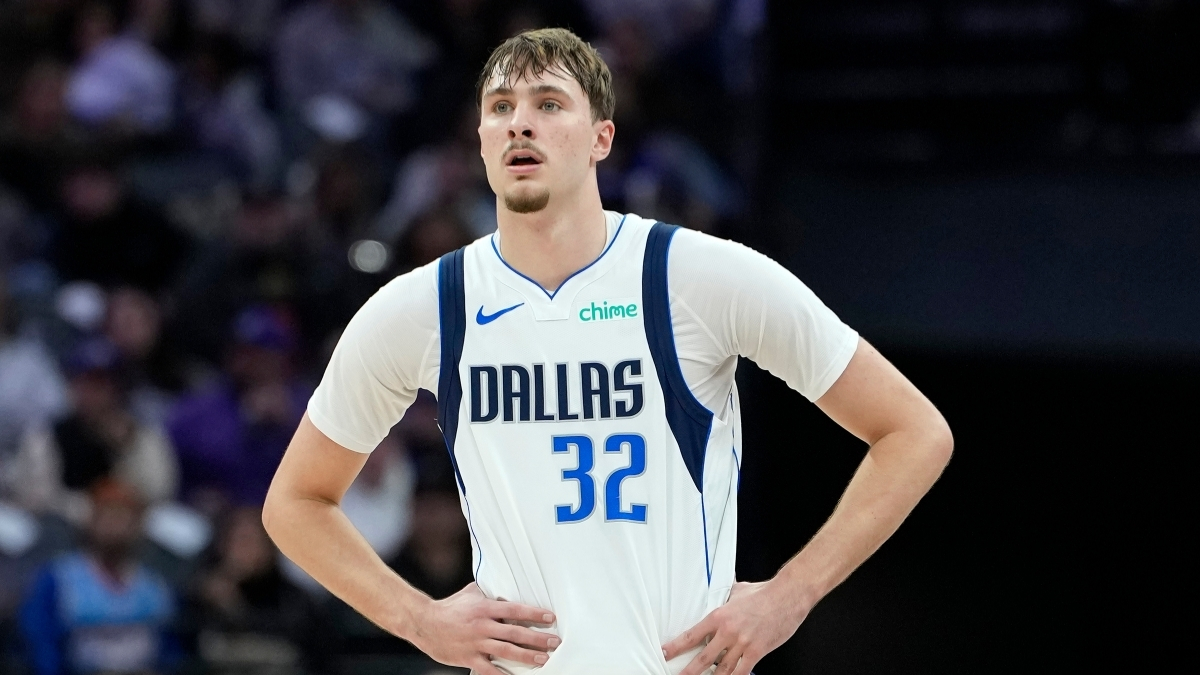
The NBA rookie wall is rarely obvious when it first appears. It isn’t always marked by a sudden drop in confidence or a prolonged scoring slump. More often, it shows up in small ways — tired legs, fluctuating efficiency, and the mental strain of carrying responsibility every night against elite competition.
For Cooper Flagg, that phase has begun to surface in Dallas. And rather than pulling back, the Mavericks are asking him to play through it.
Through 35 games this season, Flagg has averaged 18.9 points, 6.4 rebounds, and 4.1 assists, numbers that already place him among the most productive first-year players in the league. Over his last 17 games, that role has expanded further, with Flagg averaging 22.1 points, 6.4 rebounds, and 5.2 assists, reflecting increased usage, playmaking responsibility, and trust from the coaching staff.
That growth has come alongside the heaviest workload of his basketball career — a reality head coach Jason Kidd has acknowledged openly.
Cooper Flagg Shouldering Heavy Minutes, Real Adjustment
Flagg is playing more minutes per night than he ever did at the college level, while also being tasked with defending multiple positions, initiating offense, and making reads late in games. That combination has naturally led to nights where efficiency wavers, even as impact remains.
That adjustment has been visible in recent games. Over his last three outings, Flagg has averaged more than 35 minutes per night as the physical and mental demands have accumulated.
In a two-point loss at Portland on Dec. 29, Flagg scored 15 points on 6-of-20 shooting but stayed deeply involved, finishing with eight assists, six rebounds, and three steals while creating offense late. Two nights later against Philadelphia, he added 12 points on 5-of-15 shooting along with seven rebounds and seven assists as Dallas struggled to find rhythm. In the Jan. 3 win over Houston, Flagg shot 3-of-12 but again impacted the game across the board, recording seven rebounds, six assists, two steals, and a block while helping close out the victory.
Across that three-game stretch, Flagg averaged 12.3 points, 6.7 rebounds, and 7.0 assists. While the shooting efficiency dipped, his involvement did not.
Rather than scaling back his role, Dallas has continued to rely on his versatility — asking him to initiate offense, defend multiple positions, and make reads under pressure. Head coach Jason Kidd has framed that phase as inevitable — and necessary.
“He’s playing a lot of minutes,” Kidd said. “For the great ones, they touch the rookie wall. They don’t run from it. They don’t hide from it. They find a way to go through it, around it, or over it. It’s not going to move.”
Rather than reducing Flagg’s role, Dallas has leaned into his versatility. Even on nights when the jumper isn’t falling, he remains central to ball movement, defensive coverage, and transition offense.
Rather than reducing Flagg’s responsibilities, Dallas has leaned further into his all-around game. Even on nights when the jumper isn’t falling, he remains central to ball movement, defensive coverage, and transition offense.
That was evident again in the win over Houston, when Flagg sat much of the first quarter after picking up two early fouls but adjusted when he returned — rebounding, creating for teammates, and staying engaged defensively.
“You’re not always going to score 30 every night,” Kidd said. “He got in foul trouble, and that probably took away some of his rhythm, but I thought the maturity of being able to do other things for his teammates — finding them for threes, making plays, rebounding the ball — was big. He competed, and he helped us win.”
Playing With Aggression Without Forcing
From within the locker room, Flagg’s stretch has been viewed less as a concern and more as a normal part of the transition to the NBA.
Anthony Davis, who has navigated similar phases throughout his career, pointed to the cumulative toll of an NBA schedule.
“When you’re used to playing 38 games and you come in and it’s not even halfway through the NBA season, it can be a lot,” Davis said. “We put a lot of pressure on him. We ask him to do a lot. Every rookie kind of hits that stretch. But he’s playing good basketball, and it’s our job to help him through that.”
That support has come without lowering expectations. Flagg continues to draw difficult defensive assignments and is often relied upon to make secondary reads when the offense bogs down.
Despite recent efficiency swings, the message from the coaching staff has remained consistent: stay aggressive, but stay within the flow.
Following the Jan. 1 loss to Philadelphia, Flagg emphasized that his shot attempts are coming within the flow of the offense — and that the coaching staff has encouraged him to keep attacking.
“It’s just the looks,” Flagg said. “Being aggressive is good for the team, and that’s what the coaches and teammates are telling me. I’m just being myself.”
In that same game, Flagg pointed to execution and energy — not shot selection — as the bigger issue.
“Our energy dropped,” he said. “We turned the ball over. We’ve got to do a better job taking care of it.”
Late-game results haven’t always followed, but Flagg has remained process-focused.
“They hit timely shots,” Flagg said of the 76ers. “We didn’t get the stops we needed. We missed a bunch of easy ones, and that doesn’t help. We’ve got to get more stops and turn that into offense.”
Playing Through the Rookie Grind
Physically, Flagg has acknowledged the challenge of the season while framing it as an adjustment rather than an obstacle.
“I feel solid,” he said. “It’s a lot of basketball, but I’m figuring out my routine — what works and what doesn’t. Some days you feel tired, some days you don’t feel 100 percent, but you play through it and figure it out.”
That mindset mirrors how Dallas has handled his development from the start. The rookie wall isn’t something the Mavericks are trying to shield Flagg from — it’s something they believe he’s capable of navigating. Kidd has been clear about that expectation.
“You’ve got to embrace it,” he said. “That’s just a mental thing. For the great ones, they touch it. They don’t run from it. They find a way to go over it or through it or around it. It’s not going to move.”
Despite the recent shooting variance, Flagg remains among the league leaders in rookie production and continues to impact games beyond the box score. His increased scoring and playmaking over the past month reflect a player adjusting — not regressing — under a growing workload.
For Dallas, the priority isn’t avoiding the rookie wall. It’s trusting Flagg to work through it, with responsibility intact.
And so far, that trust has been reflected not only in minutes and usage, but in the way his role continues to grow.
Latest Dallas Mavericks News & NBA Trade Rumors
- NBA News: ‘Being Able To Flip That Switch’: Max Christie Making Strides As Aggression Fuels Dallas Mavericks’ Offense
- NBA News: Dallas Mavericks Injury Notes Featuring P.J. Washington, Kyrie Irving In Sacramento
- NBA News: Dallas Mavericks, Houston Rockets Headed To Macao For NBA China Games 2026
- NBA News: ‘He Changes The Dynamic’: Anthony Davis Confident Kyrie Irving’s Return Will Elevate Dallas Mavericks
- NBA Rumors: Sources: Unsettled Trade Market Surrounds Dallas Mavericks Star Anthony Davis
- NBA News: Dallas Mavericks’ Cooper Flagg Earns Second Straight West Rookie Of The Month
- NBA News: ‘We Just Didn’t Capitalize’: Philadelphia 76ers Pull Away Late As Dallas Mavericks Fall On New Year’s Day