When Ja Morant is unavailable, Memphis’ offense immediately loses its burst. The Grizzlies’ downhill pressure, transition scoring and pace all drop sharply, forcing a slower, half-court approach that restricts their natural advantage. Sportsbooks respond accordingly, widening point spreads and lowering Memphis’ implied win probability.
Anthony Davis’ absences carry a different type of weight. His rim protection and defensive command are central to the Lakers’ identity, and without him, opponents attack the paint more freely. Matchups shift, schemes adjust and oddsmakers often recalibrate totals, spreads. and futures outlooks. Any elite two-way player missing time — whether a repeat All-Star or a primary offensive facilitator — is treated as a fundamental change to roster stability, similar to the effect of a major trade.
The Correlation Between Injuries and Win Probability Metrics
Win-probability models react almost instantly to injury news, updating expected outcomes for both individual games and long-term playoff trajectories. Modern systems rely on Bayesian updating and Monte Carlo simulations that automatically recalculate team strength when a key player is removed from the equation.
Even a contributor responsible for roughly 10 percent of a team’s baseline win share can produce a steep decline, dropping expected win probability from around 65 percent to 50 percent or lower. In playoff simulations, the effect compounds — a single injury report can slash advancement odds by double digits.
If an injury occurs midgame, win-probability tools dynamically adjust. A team that entered as a 10-point favorite may quickly fall to a narrow projected margin after losing its star. Regardless of the underlying model, the conclusion remains the same: losing a primary contributor reduces expected performance and forces every projection system to recalibrate.
How Betting Markets Reflect Shifts in the NBA Power Structure
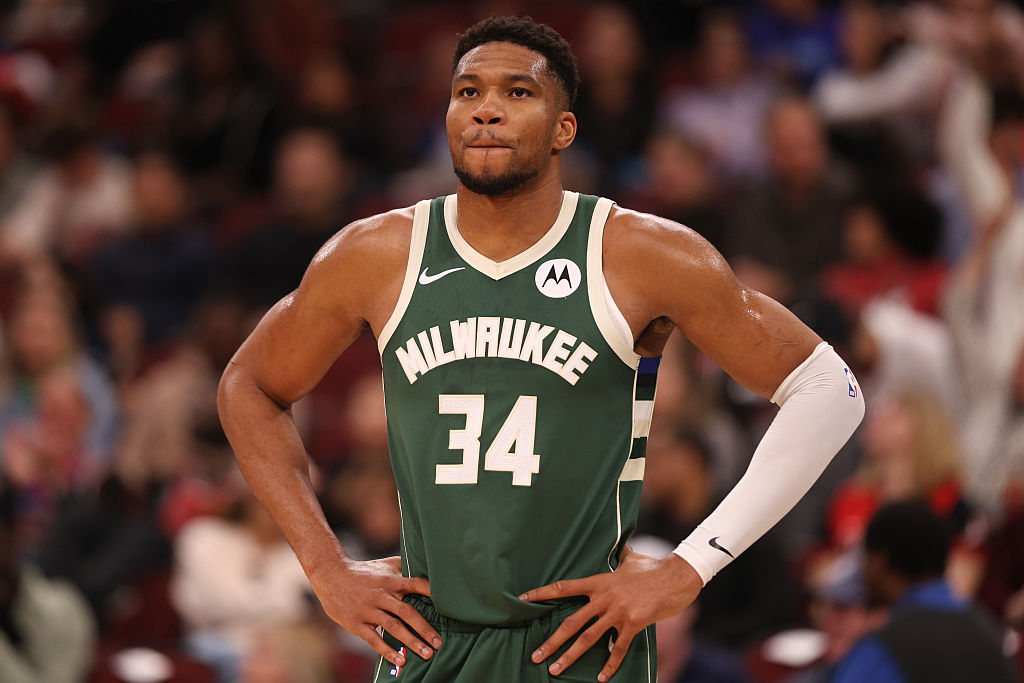
Betting markets provide a real-time mirror of how injuries reshape competitive hierarchies across the NBA season. Markets for conference champions and NBA titles are particularly sensitive to injury news. The NBA injury report often plays a decisive role in shifting betting sentiment — Antetokounmpo’s absence, for example, drove Milwaukee’s odds downward, while the Lakers’ odds surged after acquiring Luka Dončić, jumping from +3,300 to +1,600. This volatility extends beyond futures markets into daily betting, where line oscillations reflect the constant rebalancing of perceived team strength.
These shifts extend into daily markets. Point spreads and totals oscillate as sportsbooks reassess team strength, often influenced by public reaction as much as by empirical data. A single absence can push a team from secure playoff positioning toward play-in territory, and sportsbooks adjust lines to account for both market sentiment and liability.
Practical Implications for Bettors and Analysts
For bettors and analysts, understanding how absences influence performance is essential. Real-time injury updates from credible sources can provide an early advantage, especially during the brief window before sportsbooks complete their adjustment cycle.
Maintaining internal projections — including models that simulate outcomes without key players — helps identify mispriced odds. Capitalizing on short-term inefficiencies in moneylines or spreads immediately after news breaks can be profitable, particularly when public sentiment diverges from team-level data.
Across a full season, simple health can become a competitive edge. Teams that keep their cores intact build consistency not just on the court but also in the perception of bettors and markets.
Limitations and Counterfactuals
Even though the “injury effect” is substantial, several factors can reduce its impact. Depth matters; teams with strong second units may absorb absences in the short term without sharp market corrections. One-game breaks often produce minor shifts, while longer or season-ending injuries create the biggest ripples.
Context also plays a role. A missing star facing a weaker opponent may lead to a moderated sportsbook reaction. And despite increasingly advanced models, variance still governs the sport — unexpected performances, hot shooting nights or simple luck can override the predictive power of data.
The Lasting Grip of a Single Absence
When a superstar such as Giannis Antetokounmpo or Luka Dončić is removed from competition, the league’s power structure doesn’t merely wobble — it reshapes itself. Betting lines, win-probability metrics, playoff odds and power rankings all adjust in real time. A single absence can alter a team’s trajectory and redefine expectations across the NBA.
For analysts and bettors, the lesson remains clear: monitoring the NBA injury report and integrating real-time data is essential to understanding how one injury can reshape an entire season.