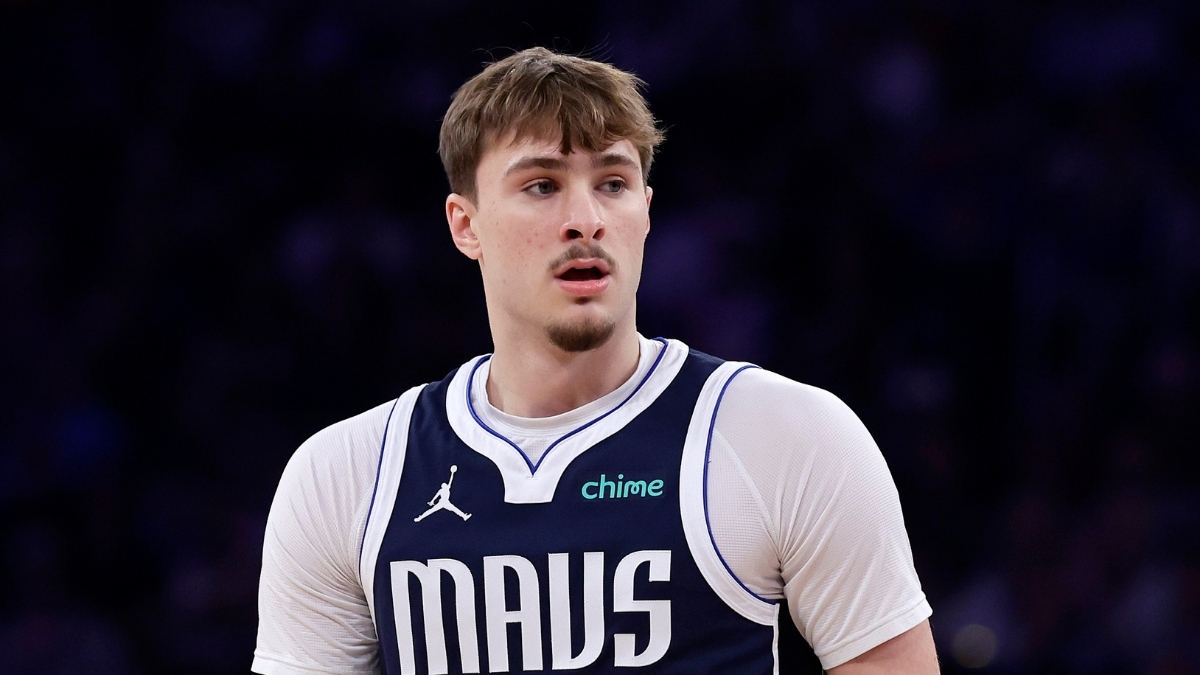
As questions followed the Dallas Mavericks’ latest loss in Houston, Mark Cuban made clear where he stands on one of the most scrutinized decisions of the NBA season.
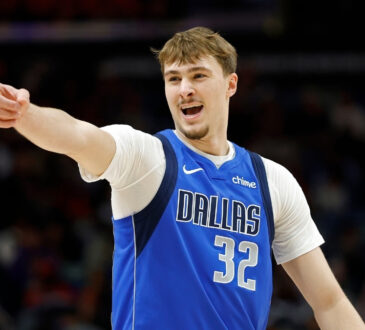
Cuban publicly backed Jason Kidd and the Mavericks’ decision to use Cooper Flagg as a primary ball handler, emphasizing that the approach was deliberate, long-term, and discussed well before Flagg ever played an NBA game.
Cuban said Kidd “did the exact right thing playing Coop at PG,” adding that the idea was one he personally encouraged.
“Point guard, point guard, point guard… let him bring the ball up,” Cuban wrote, referencing text messages he sent to Kidd prior to the season.
The comments followed renewed discussion around Flagg’s role after Dallas dropped its fourth straight game, but Cuban’s message was consistent: the plan has not changed.
Mark Cuban Says Cooper Flagg’s Role Was Never About Position Labels
While Flagg’s usage has drawn national attention, particularly in late-game situations, the Mavericks have consistently framed his role as developmental rather than positional.
Rather than treating Flagg as a traditional point guard, Kidd has emphasized responsibility—trusting the rookie to initiate offense, manage tempo, and make decisions under pressure when games tighten.
That philosophy resurfaced after Saturday’s loss to the Houston Rockets, when Kidd was asked directly about national criticism of playing Flagg at point guard.
“Criticism? That’s your opinion. You guys write that bullshit. That’s not — I’ve done this. I’ve played this game. I played it. I know what the fuck I’m doing,” Kidd said.
“I don’t give a fuck what you guys write because you guys have never played the game. I build players, so I know what the fuck I’m doing. So if I take criticism, it only makes me better, because if I wasn’t doing it right, you guys wouldn’t be poking holes in what I’ve done.”
For Cuban, Kidd’s response aligned with the organization’s internal thinking. The Mavericks are prioritizing Flagg’s growth as a decision-maker over short-term optics or outside evaluation.
Mark Cuban Says Cooper Flagg’s Role Was Never About Position Labels
While Flagg’s usage has drawn national attention — particularly in late-game situations — the Mavericks have consistently framed his role as developmental rather than positional.
Rather than treating Flagg as a traditional point guard, Kidd has emphasized responsibility, trusting the rookie to initiate offense, manage tempo, and make decisions under pressure.
That philosophy resurfaced after Saturday’s loss to the Houston Rockets, when Kidd was asked directly about outside criticism.
“I don’t give a fuck about the criticism,” Kidd said. “I’ve played this game. I know what the fuck I’m doing. I build players.”
For Cuban, Kidd’s response aligned with internal thinking. The Mavericks are prioritizing Flagg’s growth as a decision-maker over short-term optics.
Cooper Flagg Was Honest About the Learning Curve Early
Earlier in the season, Flagg acknowledged that the responsibility arrived quickly.
Following a double-overtime loss to the Los Angeles Clippers during Dallas’ early struggles, Flagg spoke candidly about the challenge of being thrust into an on-ball role.
“Being a point guard comes with a lot of responsibility,” Flagg said. “I don’t know if I was ready for that right away. It doesn’t mean I can’t go back to it or improve, but lately it has been better having someone else help with pressure.”
The admission reflected context rather than hesitation. Injuries and roster instability forced Flagg into heavy on-ball duties during the opening weeks of the NBA season.
“It doesn’t mean I can’t bring it up,” Flagg added. “But having another ballhandler helps.”
Dallas Mavericks Roster Context Forced Early Creativity
The Mavericks’ early reliance on Flagg was shaped by roster construction.
Former general manager Nico Harrison used the taxpayer mid-level exception on D’Angelo Russell despite emphasizing defense following the Luka Dončić trade. It became clear in preseason that Russell would struggle defensively, and his role diminished into frequent DNP-CDs by December.
Guard depth was further strained when Danté Exum underwent knee surgery before re-signing, limiting reliable two-way options. As a result, Dallas was forced to adapt quickly.
The Mavericks leaned into positionless lineups, at times starting two-way rookie Ryan Nembhard while relying on Brandon Williams off the bench. The goal was stability, not labels.
Spacing Issues, Not Cooper Flagg, Were the Primary Challenge
One of the key challenges with Flagg starting at point guard was not his ability to handle the ball, but the spacing around him.
Lineups featuring Anthony Davis at the four alongside a non-shooting center compressed the floor, making half-court execution more difficult. Turnovers, low three-point volume, and poor shooting efficiency compounded those issues in close games.
At the same time, Dallas remained mindful of protecting Kyrie Irving’s workload. The belief is that Irving is at his best when he doesn’t have to burn energy on serving as a traditional point guard. He can use a more score-first approach — as he did with Luka Dončić — with Flagg playing more like a point forward.
Cooper Flagg’s Role Has Evolved, Not Disappeared
Although Flagg is often listed as a forward, his involvement as a ball handler remains central. The early-season experience running the offense provided valuable repetitions that helped him grow comfortable reading defenses and absorbing pressure despite the team’s struggling record to start.
As the season has progressed, Flagg has increasingly initiated offense late in games, often serving as a closer rather than a stationary scorer. The Mavericks have leaned further into positionless lineups, with Naji Marshall also handling the ball to share responsibility.
Through 45 games, Flagg is averaging 19.8 points, 6.6 rebounds, and 4.1 assists. Over his last two games, he scored 49 points against Charlotte and 34 points against Houston, becoming the youngest player in NBA history to record back-to-back 30-point double-doubles.
“It’s just trust,” Flagg said. “I feel like J-Kidd has a lot of trust in me, and I have a lot of trust in him. We’re just building that relationship.”
Belief Inside the Dallas Mavericks Remains Firm
The Mavericks’ record has not yet reflected Flagg’s individual growth. Internally, however, ownership, coaching, and player leadership remain aligned.
“He’s built to win,” Kidd said. “He’s going to try to do everything to help his team win, and he’s done that all season.”
For Cuban, the message was simple: the plan was intentional, the development deliberate, and the criticism is not altering the direction.
Latest Dallas Mavericks News & NBA Rumors
- NBA News: Mark Cuban Calls Luka Dončić Trade A ‘Mistake’ For Dallas Mavericks One Year Later
- NBA News: Dallas Mavericks Rookie Cooper Flagg Becomes Youngest Player With Back-to-Back 30-Point Double-Doubles
- NBA News: ‘I Know What The Fuck I’m Doing’: Jason Kidd Explodes Over No-Call, Criticism After Loss To Houston Rockets
- NBA News: Sources: Dallas Mavericks Star Kyrie Irving Could Return After NBA All-Star Break
- NBA News: ‘I Saw A Foul’: Dallas Mavericks Fume as Fourth Straight Loss Slips Away Against Houston Rockets
- NBA News: ‘You Saw History’: Cooper Flagg’s 49-Point Night Collides With Late Turnover As Dallas Mavericks Fall To Charlotte Hornets