The NBA calendar always builds toward April, and this year carries a different kind of tension. With the Play-In Tournament complete and the first round now a few days in, familiar contenders remain in the mix, yet the balance of power is clearly shifting in real time.
Rising stars are no longer waiting for their turn. Established teams are being pushed in new ways. That combination has created a postseason field where certainty is hard to find and where a handful of defining storylines could ultimately decide who lifts the trophy.
The Thunder’s Quest for a Dynasty
Oklahoma City entered the postseason as more than just a top seed; they’re the standard everyone else is chasing. Their dominant regular season had them flirting with history, and back-to-back titles now feel like a real possibility rather than a projection.
Shai Gilgeous-Alexander continues to drive everything. His recent scoring bursts, including a 47-point performance, strengthen his MVP case and underscore how difficult he is to contain over a full game. That form carried into the first round, where his 37 points fueled a 120-107 Game 2 win over the Phoenix Suns and pushed Oklahoma City to a 2-0 series lead, though he exited in the third quarter with a left hamstring injury that now looms over the rest of the run.
The supporting cast is just as important. Chet Holmgren anchors the defense at the rim, Isaiah Hartenstein adds physicality inside, and the bench provides a level of depth and consistency that few contenders can match.
Pressure has fully arrived. Oklahoma City is no longer catching anyone off guard, and regular-season struggles against San Antonio hinted at vulnerabilities that any second-round path could surface again. The real test isn’t talent, it’s the ability to adjust when every opponent is game-planning to beat them, especially if Gilgeous-Alexander is anything less than full strength.
The Wembanyama Warning: San Antonio’s Rapid Ascent
Few teams reshaped the postseason conversation faster than the Spurs. A sustained stretch of wins down the stretch, including extended streaks, pushed them to the No. 2 seed in the West and made them a legitimate threat entering the bracket.
Victor Wembanyama is at the center of it all. His stat lines feel almost unreal: 41 points and 18 rebounds at an age when most players are still adjusting. His defensive presence alone reshapes offenses, closing driving lanes and altering shots before they’re even taken.
San Antonio’s confidence matches its talent. Wembanyama’s dismissal of the “experience” argument reflects a team that doesn’t see itself as a feel-good story. That mindset matters in the postseason, where hesitation can decide a series.
The first round has already tested that ceiling. Wembanyama exited Game 2 in the second quarter after a hard fall left him with a concussion, and Scoot Henderson’s 31 points powered Portland to a 106-103 upset that evened the series at 1-1. With the Trail Blazers closing on a 16-4 run over the final five minutes and Wembanyama’s status uncertain, the momentum the Spurs carried in has hit its first real resistance. How San Antonio responds to that setback, not the roster’s age, may decide how long this run lasts.
Detroit’s Return to “Bad Boys” Basketball
Detroit’s rise to the top of the Eastern Conference stands as one of the season’s biggest surprises. A team that struggled just a year ago now looks built for postseason basketball, anchored by a clear identity and a commitment to physical play.
That identity starts on defense. Under J.B. Bickerstaff, the Pistons embraced discipline and toughness, emerging as one of the league’s most disruptive defensive units. Opponents don’t just lose to Detroit; they’re worn down over the course of a game.
The growth of their young core has been just as important. Cade Cunningham has become a steady leader who controls tempo and delivers in clutch moments, while Jalen Duren anchors the interior. Around them, a versatile supporting cast adds size and flexibility.
That identity got tested right away in the first round. The eighth-seeded Orlando Magic stole Game 1 at Little Caesars Arena, building an early lead they never surrendered, before Detroit responded with a 98-83 Game 2 win to even the series at 1-1. Cunningham has averaged 39 points through the first two games, with the Pistons leaning on his production to steady the series before it shifts to Orlando.
That combination translates well to the playoffs, where games slow down, and physicality matters more. Detroit can limit easy scoring, apply pressure, and turn matchups into drawn-out battles, an approach that may not be flashy but consistently delivers results.
The Celtics’ Resilience and Health
Boston’s season hasn’t been straightforward, yet its ceiling remains as high as any team’s. Jayson Tatum’s return changed everything, as he’s looked sharp, confident, and capable of carrying the offense when needed.
When Boston is fully healthy, the roster checks every box. Jaylen Brown adds scoring balance, Derrick White provides stability, and their defense keeps them competitive. Tatum’s 25 points, 11 rebounds, and 7 assists powered a 123-91 Game 1 blowout over the 76ers, though Philadelphia answered with a 111-97 Game 2 win as Tyrese Maxey and VJ Edgecombe produced 59 points between them to even the series.
Perception around Boston and other contenders has shifted with health, performance, and momentum. Those changes are often reflected in betting lines, which track how expectations adjust as new information emerges.
Health remains the variable that could define everything. Tatum’s durability is critical, and frontcourt depth concerns linger. A fully healthy Celtics team looks like a Finals contender. A compromised one suddenly becomes vulnerable.
Star-Studded Crossroads in Los Angeles
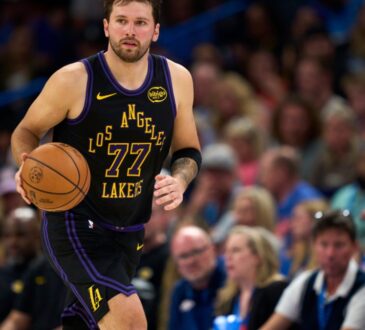
The Lakers have quietly positioned themselves as one of the most fascinating teams in the bracket, and they’ve done it shorthanded. A No. 4 seed in a loaded Western Conference was no small feat to begin with, and holding a 2-0 series lead over the Houston Rockets without Luka Dončić and Austin Reaves makes it even more unlikely.
Both stars went down in the same April 2 loss at Oklahoma City. Dončić suffered a Grade 2 hamstring strain, traveled to Spain for treatment, and is not expected back during the first round. Reaves is working through a Grade 2 oblique strain and has begun 1-on-1 on-court work, putting him on track for a potential late-series return or early second round, according to ESPN’s Shams Charania. Together, the two averaged 56.8 points, 12.4 rebounds, and 13.8 assists per game when healthy this season, a combined production Los Angeles has had to replace by committee.
LeBron James, now 41, continues to defy expectations, shouldering the offensive load in their absence. He posted 28 points, 8 rebounds, and 7 assists in a 101-94 Game 2 win over the Rockets, even with Kevin Durant back in Houston’s lineup after missing Game 1 with a knee contusion. Around him, Luke Kennard erupted for 27 points on 9-of-13 shooting in Game 1, including 5-of-5 from three, and Marcus Smart added 25 points, 7 assists, and 5 steals in Game 2 after returning from his own right ankle issue.
Playoff basketball often favors teams that can execute in the half-court, and the Lakers excel in that area. As the game slows and fast breaks fade, decision-making becomes critical, and few teams generate high-quality looks with this little margin for error.
A sense of urgency surrounds this run. Questions about LeBron James’ future linger, adding emotional weight to every game, and every game Los Angeles extends in this series is another day Reaves, and potentially Dončić, can use to get closer to returning. That narrative doesn’t guarantee success, but it does create a level of focus that can carry a team through difficult stretches.
How These Storylines Could Shape the Bracket
Each contender brings a distinct identity, and those identities are already colliding in ways that will define the postseason. Some lean on depth, others on star power. Matchups are starting to reveal which approach holds up best.
Several potential matchups still loom:
- Oklahoma City facing San Antonio in a clash of dominance versus momentum,
- Detroit meeting Boston in a physical versus finesse showdown,
- The Lakers testing younger teams with experience and control.
Themes are emerging quickly as depth challenges star power, youth tests experience, and health shapes outcomes overnight. No single formula guarantees success, but the teams that adjust fastest, and stay healthiest, will have the clearest path forward.
A Postseason Defined by Change and Opportunity
The 2026 postseason feels like a turning point, with new contenders stepping into the spotlight while established teams fight to hold their ground. That tension creates a playoff field filled with real possibilities, where multiple teams have a legitimate path to the Finals.
Oklahoma City aims to cement its place at the top, while San Antonio works to steady itself after an early stumble. Detroit brings a physical edge, Boston balances talent with uncertainty, and Los Angeles leans on LeBron James and whatever return timelines it can buy. Each path feels plausible, making this postseason especially compelling.