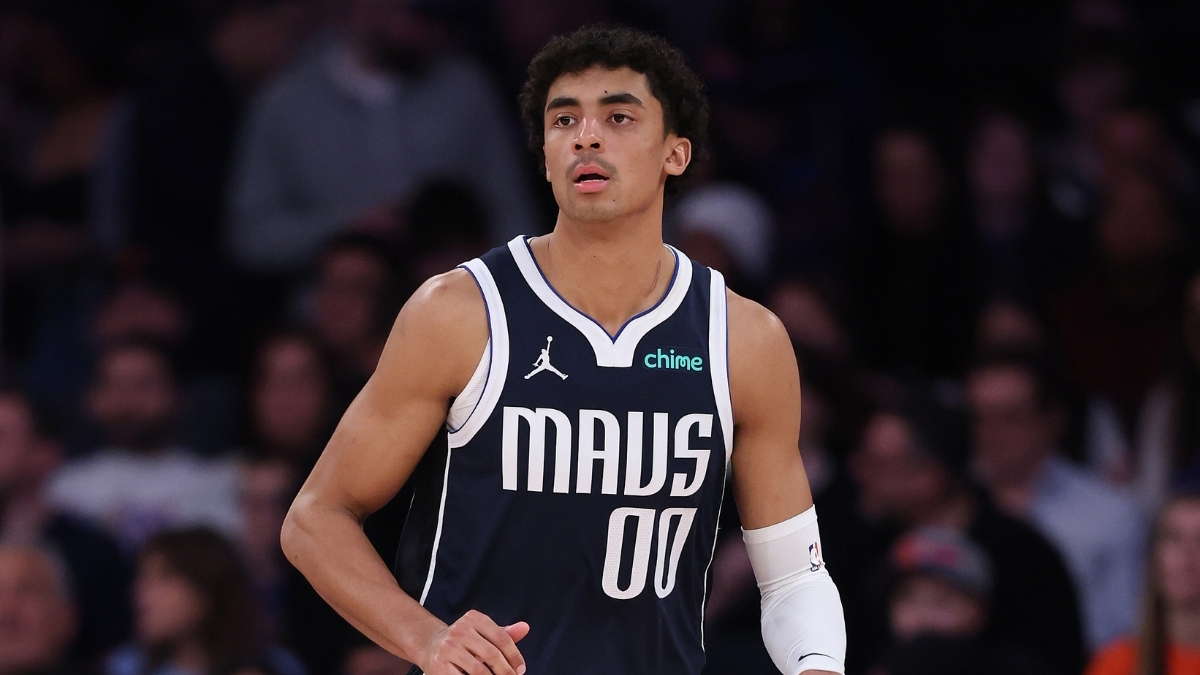
The circumstances suggested a grind. The execution delivered a rout. Short-handed and playing on the road against one of the Eastern Conference’s top teams, the Dallas Mavericks instead imposed their will from the opening tip Monday night, overwhelming the New York Knicks with speed, spacing, and sustained defensive pressure in a 114–97 victory at Madison Square Garden.
The Mavericks improved to 18–26 overall and 5–14 on the road, while the Knicks fell to 25–18 and 16–6 at Madison Square Garden. It marked just the third road win for Dallas since the start of December.
Dallas never trailed in this game, built a lead as large as 30 points, and turned the league’s most famous arena restless well before halftime. The Mavericks shot 48.8% from the floor and 46.9% from three-point range, scored 32 fast-break points, and never allowed New York to turn the game into the half-court battle it prefers.
The win marked Dallas’ third victory in its last four games and reinforced an identity that has taken shape amid injuries: play fast, share the ball, and make teams guard the full width of the floor.
Since Jan. 12, Dallas has played at a 101.9 pace, fourth-fastest in the NBA over that span, while producing the league’s sixth-ranked offense. The Mavericks have increased their three-point volume to 37.4 attempts per game, converting at a 38.5% clip, and have generated 26.4 free-throw attempts per game, third-most in the league during that stretch. Even with missed opportunities at the line — 68.2% — overall efficiency has surged, with Dallas shooting 50.9% from the floor, fifth-best in the NBA.
Early Pace Establishes Control
Dallas opened on a 13–4 run, forcing a Knicks timeout just minutes into the game as Max Christie connected on an early transition three and Cooper Flagg attacked downhill before help could arrive. Naji Marshall pushed the ball off rebounds, initiating offense early in the shot clock and preventing New York from setting its preferred coverages.
Even after the timeout, the pace did not change.
The Mavericks continued to attack before the Knicks could get matched up, relocating shooters and forcing rotations that opened driving lanes. Christie kept moving without the ball, Marshall exploited gaps created by early closeouts, and Flagg consistently pressured the rim. By the end of the first quarter, Dallas had built a 31–22 lead, controlling tempo while keeping New York from finding any sustained rhythm.
The separation came swiftly in the second quarter.
Dallas opened the period with another burst, stringing together defensive stops and immediately turning rebounds into transition opportunities. Christie buried multiple threes as the Knicks scrambled to recover. Flagg finished in the open floor. The Mavericks’ bench provided energy and activity, allowing the pace to remain constant even as lineups shifted.
The result was Dallas’ most decisive stretch of the night.
The Mavericks poured in 44 points in the second quarter, repeatedly beating New York down the floor and stretching the defense beyond its comfort zone. Madison Square Garden grew restless as the lead climbed past 20, with Dallas dictating every phase of the game. By halftime, the matchup had tilted sharply. Dallas carried a 75–47 lead into the break, having fully imposed its will.
Mavericks head coach Jason Kidd emphasized afterward that the tone of the game was set less by shot-making than by the speed and decisiveness with which his team played — regardless of result.
“I thought the group was really good this evening,” Kidd said. “When you talk about the pace, it set the tone for us. Make or miss, we were playing fast.”
Kidd also pointed to the collective buy-in that allowed the second-quarter surge to sustain itself despite a constantly changing rotation.
“Understanding that everyone’s touching the ball — there’s no one complaining about shots,” Kidd said. “Guys are just playing basketball and playing for each other. You can see that on both ends, offensively and defensively.”
Max Christie’s Shooting Tilts the Floor
The pace forced New York to scramble. Max Christie made it hurt. He hit his first three-pointer on Dallas’ second offensive possession, sprinting into space before the Knicks could establish coverage. Another followed off a kick-out created by a Marshall drive. By the time Christie drilled his fourth three, New York’s defenders were closing harder, rotating earlier, and leaving seams elsewhere on the floor.
Christie finished with 26 points, eight rebounds, and eight made three-pointers on 10 attempts. He scored within the flow of the offense — relocating, sprinting into windows, and capitalizing on defensive attention drawn by penetration.
“My teammates did a great job getting me open looks,” Christie said. “They were attacking the paint, and I was able to get loose for a couple of threes. Even without the ball, I was just trying to find my spots, find my shots, and be shot-aggressive. It felt good to get 10 threes up, and obviously making eight of them is great too.”
As the makes piled up, Christie entered a rhythm familiar to elite shooters — one where decision-making becomes instinctive.
“It’s kind of out-of-body,” Christie said. “You’re unconscious — you don’t really feel what’s going on around you. You’re just in a flow state. Your body takes over, and it’s a great feeling.”
As Christie’s shooting continues to bend coverage, the next phase has already arrived: harder closeouts and fewer clean looks.
Over 40 games this season, Christie is averaging 12.9 points, 3.5 rebounds, and 2.2 assists. Over his last two games, that production has spiked to 24.0 points, 4.0 rebounds, and 3.0 assists per game as both volume and responsibility have increased.
“It’s about reading the closeout defender,” Christie said. “When you’re shooting at this level, you’re not always going to get easy catch-and-shoot looks. Being able to get guys up in the air and create space is important.”
Christie said the coaching emphasis has remained on volume with intent.
“Getting my three-point attempts up,” he said. “Ten tonight was great. Regardless of making eight, I think ten attempts is a good mark for me right now. Continuing to hunt those shots.”
Cooper Flagg Returns, Marks First NBA Game at MSG
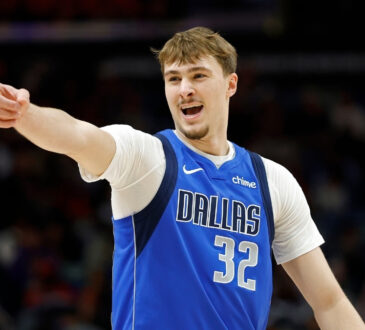
Beyond the shooting display, the night carried added weight for Cooper Flagg. He had missed Dallas’ previous two games with a left ankle sprain, and his return came on one of basketball’s most demanding stages. It marked his first NBA appearance at Madison Square Garden — an arena he had previously experienced as a college player, but never at the professional level.
Flagg played on restricted minutes but showed no hesitation. He attacked closeouts, finished in transition, and turned defensive stops into immediate offense. He finished with 18 points and seven rebounds in 28 minutes, shooting 7-of-14 from the field.
Flagg said the ankle never became a mental factor once the game began.
“I feel great,” Flagg said. “Coming back, obviously, I was a little restricted minutes-wise, but I felt great out there. I didn’t second-guess it or anything. Strength felt good.”
The performance aligned with his season-long production. Flagg is averaging 18.8 points, 6.3 rebounds, and 4.1 assists across 41 games, maintaining efficiency while taking on expanded responsibility amid injuries.
He credited the team’s recent continuity for smoothing his transition back into the lineup.
“Those two games were huge for us,” Flagg said. “The guys built more continuity, the offense started flowing, and it was good carryover tonight.”
Defensively, Flagg spent extended stretches matched against Jalen Brunson, leaning on team concepts rather than individual containment.
“Coach said it — he’s one of the best,” Flagg said. “You’ve got to have five guys guarding the ball and covering for each other. He’s going to make plays, he’s going to hit tough shots, but as long as we don’t let him dictate the pace.”
The moment itself — playing at Madison Square Garden as an NBA player — was not lost on him.
“It was incredible,” Flagg said. “It’s a great environment. They have really good fans, and it’s such a unique atmosphere in here.”
Naji Marshall’s Versatility and Bench Energy Sustains Separation
While Christie stretched the defense and Flagg applied pressure downhill, Naji Marshall functioned as the connective tissue that allowed Dallas to remain fluid regardless of lineup.
Marshall finished with 19 points and eight rebounds, frequently operating as a ball handler in a largely positionless group. He initiated offense, attacked tilted defenses, and defended multiple positions as Dallas cycled through combinations necessitated by injuries.
Marshall’s consistency has been a constant all season. He has averaged 14.2 points, 4.7 rebounds, and 2.9 assists in 44 games, scoring in double figures in nine straight contests and in 42 of his 44 appearances. Since Dec. 3, his production has risen to 16.4 points, 4.1 rebounds, and 3.3 assists over a 22-game span.
Against New York, his value was clearest when Christie drew aggressive closeouts. Marshall attacked the gaps those closeouts created, keeping the Knicks from resetting and allowing Dallas to maintain pace even when shots briefly cooled.
Dallas’ control never wavered, even as rotations shifted. Moussa Cissé delivered one of his most impactful performances of the season, finishing with 15 points, nine rebounds, and four blocks off the bench. His rim protection and energy lifted Dallas during non-Christie minutes and helped neutralize New York’s size.
“Moussa has been great,” Flagg said. “He impacts the game in a lot of different ways. Every time he comes into the game, the energy level rises.”
Klay Thompson added 14 points and provided spacing for the second unit, while Caleb Martin’s energy and defensive versatility helped Dallas sustain pressure across multiple lineup combinations.
By halftime, Dallas led 75–47. The Knicks never got closer than 18 in the second half.
Dallas Mavericks Finish the Job Defensively
New York never established a foothold because Dallas consistently finished defensive possessions and immediately turned them into offense. The Mavericks stayed connected on the perimeter, showed early help on drives, and recovered quickly enough to prevent breakdowns from cascading. Even when the Knicks generated extra looks, Dallas refused to let those chances turn into momentum, contesting without fouling and keeping the ball out of the middle.
For Cooper Flagg, the defensive performance reflected collective discipline rather than any single matchup or scheme.
“I think it was team defense,” Flagg said. “We know who their guys are, who they want to go to. There were a lot of different guys stepping up and making plays. I thought we covered for each other really well tonight and played really good team defense.”
That coverage was especially evident in how Dallas handled New York’s size and primary creators. Jalen Brunson was forced into contested attempts rather than downhill attacks, while Karl-Anthony Towns was met by a rotating cast of bodies and coverages designed to deny clean catches and rhythm touches.
Kidd said Dallas intentionally mixed its looks throughout the night, including starting smaller and using different defenders to prevent Towns from settling into comfortable matchups.
“We just tried to give them different looks,” Kidd said. “We got lucky tonight — they missed some shots they normally make. But again, rebounding the ball was big. If you give that group second and third opportunities, they’re going to make you pay.”
Kidd pointed specifically to the work done by Dwight Powell and Moussa Cissé, as well as the decision to open the game with Naji Marshall on Towns, as part of that varied approach.
“I thought Dwight and Moussa did a really good job on KAT,” Kidd said. “We also went small on him and started Naji on him. Just trying to give different looks. I thought our activity on the defensive end was really good — we came up with deflections and some steals.”
That emphasis on finishing possessions became even more critical as New York leaned into its size advantage.
“We rebounded the ball,” Kidd said. “We knew it was going to be a fight on the glass, and I thought the group did an incredible job of boxing out and giving them one shot. Then turning that one shot into being able to get out and play fast.”
Kidd added that Dallas’ willingness to play small required collective commitment.
“We understood we were small,” Kidd said. “They went really big at one point, so we knew we had to rebound the ball — and we did. Then we capitalized on the other end.”
The connection between defense and pace never wavered. Stops turned into rebounds. Rebounds turned into transition. And transition prevented the Knicks from setting their defense or dictating tempo. New York finished the night shooting 29.0% from three-point range and produced just six fast-break points, never able to string together the stops-and-scores required to make the game competitive.
By the time the fourth quarter arrived, the outcome was already decided. Dallas had dictated the terms, sustained them, and closed the door together.
Momentum Carries the Dallas Mavericks Home
The Mavericks improved to 18–26 and will look to carry the formula home Thursday when they host the Golden State Warriors.
“This group is getting to play together for a little bit, understanding that everyone’s touching the ball,” Kidd said. “There’s no one complaining about shots. Guys are just playing basketball and playing for each other. You can see that on both ends, offensively and defensively.”
On a night when Dallas arrived short-handed and left in full control, the message was clear: this wasn’t a fluke. It was a blueprint.
Latest Dallas Mavericks News & NBA Trade Rumors
- NBA News: Dallas Mavericks Clear Cooper Flagg For Madison Square Garden Debut vs. New York Knicks
- NBA News: Dallas Mavericks vs. New York Knicks Injury Updates: Will Cooper Flagg, Jalen Brunson Play?
- NBA News: ‘Not Super Happy About It’: Dirk Nowitzki Reacts As Kevin Durant Passes Him On NBA All-Time Scoring List
- NBA News: Cooper Flagg Among Key Names On 11-Player Dallas Mavericks Injury Report vs. New York Knicks
- NBA News: Klay Thompson Uses ‘Little Heater’ To Reach 17,000 Points, Lead Dallas Mavericks Past Utah Jazz
- NBA Rumors: Sources: Los Angeles Lakers, Dallas Mavericks, Sacramento Kings Linked To Jonathan Kuminga Trade Market