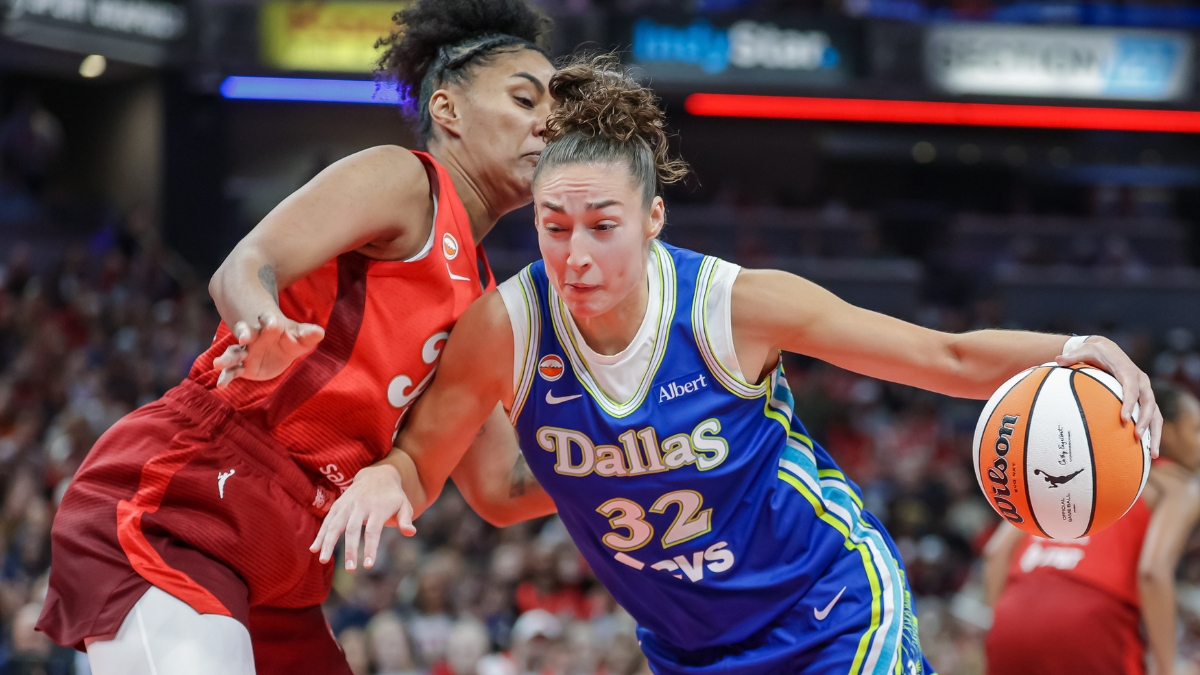
DHJ Quick Take: Dallas Wings vs. Atlanta Dream Primer
- Arc Security: Jose Fernandez and Paige Bueckers both identified Atlanta’s transition three-point hunting as the top defensive priority. With Jordin Canada, Allisha Gray, and Rhyne Howard leading the break, Dallas must shore up the perimeter discipline that wavered late in the Indiana opener.
- Slowing Down Reese: Containing Angel Reese is a “team job,” according to Alanna Smith. The strategy shifts from individual post-defense to “gain rebounding,” where guards and wings must crash back to prevent the second-chance opportunities that fuel Reese’s historic double-double production.
- The Point Guard Balance: Fernandez’s decision to start Odyssey Sims is a move to “save Paige’s legs.” By allowing Sims to handle full-court pressure and guard 94 feet, the Wings keep Bueckers fresh for fourth-quarter execution and high-IQ playmaking off the ball.
- Handling the Blitz: Atlanta’s switchable, “one-through-five” defense will test the chemistry between Bueckers and the frontcourt. Jessica Shepard serves as the primary release valve; her 9-assist debut proves she can punish overaggressive blitzes by setting up the Wings’ spread shooters.
- Championship Standard: Despite a record 107-point debut, the locker room focus remains on “unacceptable” live-ball turnovers. Odyssey Sims and Smith highlighted that the “championship standard” requires 40 minutes of poise, especially as the league adjusts to tighter early-season officiating.
ARLINGTON, Texas — The Dallas Wings host the Atlanta Dream on Tuesday at 7 p.m. CT at a sold-out College Park Center, opening the home portion of their 2026 schedule after a 107-104 road win over the Indiana Fever that set the WNBA record for most points scored by a team in a season opener. Atlanta arrives off a 91-90 comeback win over the Minnesota Lynx, having erased a 19-point deficit.
Players and head coach Jose Fernandez from the Wings, along with Dream forward Angel Reese and Dream guard Allisha Gray, addressed the matchup across Monday’s practice and Tuesday’s shootaround. The cross-team coverage spanned Atlanta’s transition attack and perimeter scoring, the Reese rebounding battle, the Wings’ backcourt identity, Atlanta’s switchable defense, and the late-game execution that defined both teams’ openers.
All-Star forward Brionna Jones is listed as out for Atlanta with a right knee injury. Wings rookie guard Azzi Fudd is listed as probable with a right knee injury.
Defending Atlanta Dream’s Perimeter Attack and Transition Game
Atlanta finished the 2025 season as one of the WNBA’s most efficient transition offenses and continued to hunt early three-point looks against Minnesota in the opener. Gray, Rhyne Howard, Jordin Canada, and stretch-four Naz Hillmon give the Dream four perimeter-capable scorers in their rotation, with Hillmon’s range adding a floor-stretching element alongside the more traditional guard scoring threats.
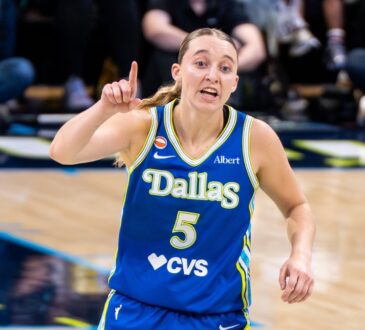
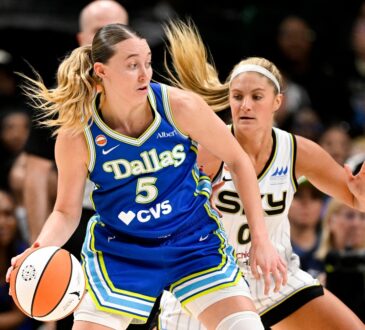
Reigning WNBA Rookie of the Year Paige Bueckers, who finished the season opener with 20 points on 8-of-10 shooting and now anchors the Wings’ perimeter both offensively and defensively, identified Atlanta’s transition game and three-point hunting as the central concerns entering Tuesday. Bueckers said the Wings must improve their transition defense from the Indiana game while turning their own transition opportunities into points on the offensive end.
“They’re really good in transition. I think they were the number one offensive transition team last year. They hunt the three-point line really well, and they’re good defensively. They’re very versatile, can switch,” Bueckers said. “Obviously having Angel, that helps too. But Naz can guard one through five as well. So I think defensively our transition defense has to improve from game one. Defending without fouling, staying disciplined, and then using our offensive transition to punish them as well.”
Fernandez, in his first season at the helm in Dallas after a long college coaching tenure, said guarding the three-point arc and staying connected to Atlanta’s perimeter group will dictate the Wings’ defensive game plan. He also cited his recent familiarity with members of the Dream roster from his work on the national team staff.
“Gotta guard their arc. They got three dynamic wings in Canada, Gray and Howard. So Hillmon can step out and stretch the floor,” Fernandez said. “We know about Angel and how hard she is. She finishes, plays off of two feet, does a great job rebounding and just her presence. Two of those guys, I just was with them a month and a half ago with USA Basketball. So our defense has to be stellar, that’s for sure, on how we guard and keep guys in front of us and make sure we guard the arc.”
Wings starting point guard Odyssey Sims, who scored 20 points in the season opener and earned the starting nod alongside Bueckers and Ogunbowale in part for her defensive value, said matching up in transition and limiting Atlanta’s high-quality looks will be the priority across both halves.
“We always focus on us. Biggest thing is we gotta match up, make sure we match up in transition, limit their shots, try to make them as tough as possible,” Sims said. “They have really great guards all around. Great team, of course. Great rebounders, great guards that can create off the dribble and/or off a pick and roll, so we really gotta key in on our defense tomorrow in transition and in the half court.”
Wings forward Jessica Shepard, who served as a frontcourt connector and pace-setter in the opener while finishing with 9 assists, framed Atlanta’s offense as multi-dimensional rather than purely guard-driven. Gray and Howard’s ability to score on all three levels forces opposing defenses to defend the arc, the mid-range, and the rim simultaneously — limiting how aggressively Dallas can load to one side of the floor.
“They’re a very perimeter-heavy team. They also have great inside players, so you can’t really just focus on the perimeter,” Shepard said. “But I think between [Allisha] and [Rhyne Howard], their ability to shoot the ball and score on all three levels, I think makes it really hard to defend.”
The Angel Reese Matchup
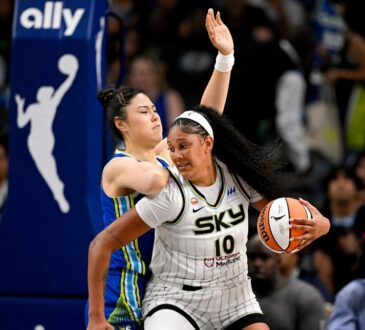
Reese, acquired by Atlanta in an offseason trade with the Chicago Sky, opened her Dream tenure with her 50th career double-double, posting 11 points and 14 rebounds against Minnesota despite a difficult shooting night. The 2-time All-Star and 2-time WNBA rebounding leader has built her game around relentless effort plays — offensive rebounds, hustle possessions, and rim runs — and will draw the bulk of attention from a Wings frontcourt anchored by Alanna Smith, the 2025 WNBA Co-Defensive Player of the Year, and Shepard, a versatile playmaking forward who also signed in free agency.
Bueckers, addressing the broader scope of Reese’s impact on Atlanta beyond the rebounding totals, said the forward changes the Dream on both ends of the floor through her paint presence, her defensive switchability, and her playmaking and finishing on offense.
“On both ends of the floor, just a paint presence on both sides. But like I said, defensively she can switch and guard one through five,” Bueckers said. “And then offensively, she’s a great screener, great roller, great passer, can finish around the rim, and provides a different spark for them. And just her energy is contagious, and she brings confidence to her teammates. So she really affects both sides of the ball, and she definitely helps the team a lot.”
Fernandez, who tied his defensive game plan to limiting Reese’s two-footed finishing and her ability to extend possessions, said the rebounding battle will be a defining factor in Tuesday’s outcome. He emphasized her physicality and consistency as the traits that will require a coordinated effort from the Wings’ frontcourt and perimeter alike.
“We know about Angel and how hard she is. She finishes, plays off of two feet, does a great job rebounding, and just her presence,” Fernandez said.
Smith, who set the defensive tone for Dallas in the opener and brings extensive experience as a defensive anchor, said containing Reese on the glass is a team responsibility rather than a one-on-one assignment. The Wings will need their guards to crash back, their wings to box out, and their bigs to occupy Reese’s body for the full duration of every possession.
“You just have to make it hard for her,” Smith said. “You know she’s gonna produce. That’s what she does when she’s on the floor — she gets rebounds. So you just have to make it difficult. And it’s not a one-person job. It’s everyone’s job on the floor to help out, gain rebound, and do it as a team.”
Shepard, whose physical frame and playmaking instincts will be tested in the post-defender role, said the path to slowing Reese is denying the activity that fuels her game. Reese’s offensive value historically rises with the volume of touches she manufactures herself, and limiting those second-chance opportunities is a focal point of Dallas’s frontcourt plan.
“I think taking away those energy plays for her,” Shepard said. “She’s a player that really feeds off energy. So I think in whatever way possible, not letting her get extra possessions for her team is the biggest way to slow her down.”
Reese, asked from the offensive perspective about the challenge Smith and Shepard present, offered detailed praise of both Wings’ additions. She singled out Shepard’s playmaking specifically, noting her 9-assist effort against Indiana and comparing her frontcourt facilitation to the versatile post passing that has become more prevalent across the league.
“They’re two great picks,” Reese said. “Obviously, Alanna was the Defensive Player of the Year, and Shep — she’s kind of like a — I don’t want to say she’s like [Alyssa Thomas] — but she does a great job of being a versatile post player that can pass. She had, what, nine assists last game. Being able to see what she continues to grow is really cool, obviously because there’s a lot of versatile bigs in this league. So those are two great picks for them, and I’m excited to see them.”
Gray said the Wings’ two offseason frontcourt additions reshaped Dallas’s identity by raising the team’s floor spacing and pace ceiling. Both Smith and Shepard can shoot from distance, rebound at a high rate, and handle the ball in transition.
“I feel like it made them faster,” Gray said. “Jess and Alanna — I was able to play with Alanna at Unrivaled — she’s a great defensive player, also can shoot the three. They’re also great rebounders, and they both can stretch the floor.”
Dallas Wings’ Backcourt Identity and Atlanta Dream’s Defensive Response
The Dallas backcourt produced the franchise-record offensive output in Indianapolis. Starting guards Bueckers, Arike Ogunbowale, and Sims combined for 62 of the team’s 107 points on 24-of-36 shooting. Aziaha James and Fudd anchor the reserve backcourt, giving Dallas a deep guard rotation capable of attacking downhill in pick-and-roll across the full 40 minutes.
Fernandez explained the rotation logic behind starting Sims over Fudd in Indiana, framing the decision as both a defensive choice and an offensive workload-management plan. Sims’s defensive impact and her ability to handle full-court pressure allow Bueckers to operate off the ball, where she remains a primary scoring threat without absorbing the wear of guarding 94 feet against the league’s most aggressive perimeter defenders.
“I thought she did well. Scored 20 points. Did a very good job defensively,” Fernandez said of Sims. “For me, I want to save Paige’s legs down the stretch in the fourth quarter. The more I can play her off the ball, we know she’s going to get trapped at the point guard spot in so many pick-and-roll situations. And also when she’s at the point guard spot, what do other teams do? They pick her up 94 feet and try to wear her out for 60 of it. So for right now, that’s our lineup, and that’s what I’m going to go with.”
Gray, who spent the first six seasons of her career with the Wings and remains one of the WNBA’s most consistent two-way wings, said Dallas’s guard depth — including reserve scoring from James — requires sustained defensive attention across the entire rotation.
“They have great guards. You can’t sleep on any of them,” Gray said. “And then with Aziaha coming off the bench, she’s a great scorer as well. They’re all great guards. You just gotta stay aware the whole game.”
Reese, who will anchor Atlanta’s ball-screen coverage as the Dream’s primary rim defender, said disrupting the Wings’ downhill attack starts with the frontcourt’s work at the level of pick-and-roll. Dallas’s guards used early-clock drag screens and high pick-and-rolls to generate pace against Indiana, and Atlanta’s containment of those actions will shape how much rim pressure the Wings can generate Tuesday.
“They’re great in the guards. The guards are great. They’re quick going downhill, from their starters to their bench, so just making sure that we’re doing a good job as post players, making sure we’re stopping them on the ball screen,” Reese said. “But they’re great guards. You gotta give kudos to them. They’re great guards.”
Gray, who shared a Dallas backcourt with Ogunbowale from 2019 through her trade to Atlanta, and knows the Wings star comes down to making her finish over contests and accepting that some shots will fall regardless.
“[Arike]’s just a bucket. You just gotta guard [Arike] the best you can, and sometimes you just gotta hope that [Arike] misses,” Gray said. “She’s great at creating her own shot. You just gotta make her take difficult shots, and if she makes them, just know that’s her. You just gotta keep trying your best.”
Atlanta Dream’s Switchable Defense and Dallas Wings’ Offensive Plan
Atlanta’s defensive identity emphasizes switching and aggressive ball denial across all five positions, a scheme Bueckers noted is built around perimeter players who can guard up and posts who can guard out. The Dream blitzed pick-and-rolls and doubled ball-handlers against the Wings’ offensive sets across last year’s matchups, and Bueckers said reading those coverages was central to her own performance against Indiana’s similarly aggressive defense.
Shepard, who has seen Atlanta’s switching defense across multiple seasons, said handling the Dream’s pressure — and capitalizing when the team over-rotates — will be a key offensive emphasis Tuesday.
“I think they have five players on the floor. They can all defend, and all can defend really one through five,” Shepard said. “So I think they are a very aggressive team, and I think we have to handle that pressure as well as take advantage of maybe some times that they’re over-aggressive.”
Bueckers said her own approach against aggressive coverage is to play the numbers — when Atlanta sends a second defender, the Wings’ shooters and playmakers should be in position to attack the resulting four-on-three. Bueckers credited Dallas’s frontcourt of Shepard, Smith, and the rest of the rotation with the screening, rolling, and playmaking necessary to convert those advantages.
“They were sending a lot of bodies, sending two, doubling and blitzing off pick and roll, and we have really good playmakers and shot makers on the team,” Bueckers said. “So just playing to that strength, playing to those numbers, staying more aggressive, looking to create for myself and then creating for others as well, getting the ball out in transition, getting easy transition buckets. And then getting better defensively, really on all aspects of the game, continuing to stay aggressive.”
Bueckers added that the trust she has built with the Wings frontcourt is what allows the offense to operate against blitzes, as the rolling and popping bigs can play through the resulting four-on-three.
“Just us having a trust, me knowing that when I give the ball up, something great is gonna happen,” Bueckers said. “Obviously having great four players — Jess, [Alanna], Li, [Awak] — just having them set screens and them being a threat to roll, to pop, and just being able to play against a four-on-three. So I just have the full confidence in them getting them the ball and knowing that they’re gonna make a smart decision, because we got shooters spread out across the floor, and then those guys are great playmakers.”
Shepard said pace remains the Wings’ core offensive identity under Fernandez and the area where Dallas executed best in the opener. Spacing and ball security were the two areas she identified for carryover improvement.
“Offensively, we did a great job of playing with pace, which is a big emphasis of this team,” Shepard said. “We know that we want to space a little better at times, and that sometimes take care of the ball a little better than we did the last game. But overall, just playing with pace on the offensive side was the biggest good from that game, I would say.”
Late-Game Execution, Officiating, and Championship Standard
Both teams faced late-game volatility in their openers but found different paths to the win column. Dallas led for the majority of its contest in Indianapolis before late turnovers nearly handed the game back to the Fever, while Atlanta erased a 19-point deficit to take its season opener.
Smith, who has been with the Wings through the team’s late-season chemistry-building stretch and offseason roster reshuffling, said the closing minutes against Indiana represent the clearest area for improvement entering Tuesday. The Wings’ late-game decision-making, communication, and ball security all factored into Indiana’s comeback attempt despite the eventual win.
“I don’t think we played that last few minutes very well,” Smith said. “I think we had a lot of turnovers and didn’t make great decisions. But it’s good to have that early on in the season and still get a win as well, so confidence is still high. It’s something that we can learn from and finish our games a lot stronger with less mistakes.”
Sims, addressing the same theme from the perspective of the starting point guard, said the standard Fernandez has set internally has not eased after the opener despite the franchise-record output. The Wings won only 19 combined games over the previous two seasons, and Sims said the head coach has framed every practice and game around the championship goal, regardless of the result.
“Our coach, Jose, holds us to a very, very, very high standard. You could just say he talks about championship, championship,” Sims said. “And even though we came out with the win in Indiana, there was some things that weren’t acceptable throughout the course of the game. Easy turnovers, live-ball turnovers, things that just make him go crazy that we’re still working at. Obviously, we have great young players mixed in with great vets, so our biggest thing is to continue to get better, be better than we were the last game, be better than we were the last practice, and I think we’re headed in the right direction so far.”
Sims also said the Wings’ defensive ceiling remains the long-term goal of the season, and that the team’s defensive improvement will not happen overnight despite the priority Fernandez and the staff have placed on it.
“It’s not something that we’re gonna wake up overnight and we’re just gonna be a tremendous defensive team, but we know that we gotta work at it, and Jose’s been doing a great job of making sure we come into practice to really lock in on that,” Sims said. “And we’ve been holding each other accountable as well as he has and our coaching staff. So we’re gonna continue to just be on each other and, like I said, just make sure that we continue to get better every day.”
Smith also addressed the league’s early-season officiating, which has produced notably higher foul totals across the schedule and contributed to Dallas’s foul trouble against Indiana. The league has instructed crews to emphasize certain points of contact, and Smith said both players and officials will need time to adjust.
“You can just see across a lot of the games that the foul count is quite high,” Smith said. “What we’ve been told is they’re emphasizing certain things, and we know what they’re emphasizing, so we just have to do a better job of adjusting to how it’s being called. It’s a little less physical, which is what we were complaining about last year, too. So it’s gonna take some time for us to adjust, and I’m sure for the refs to adjust, too. It’s new, so we just kind of have to try and attempt to do it with grace.”
For Atlanta, Gray pointed to slow first-half starts — particularly her own — as the priority correction for Tuesday.
“Not start how we started last game. Me personally, not start how I started last game in the first half,” Gray said. “Just putting a whole full court together, a whole 40 minutes together, and I think that helps us win tonight.”
Reese, whose Atlanta debut produced the rebounding totals but featured shooting struggles, said the comeback win reflected the locker room’s collective character.
“It’s like a sisterhood. Down 19, you could easily put your head down and give up. But in the locker room, we told each other, ‘Let’s keep fighting, keep fighting, keep fighting,’ and that’s what we did,” Reese said. “We have each other’s back. Even if we miss a shot — the shot before the shot Pao made, I missed a shot and I was a little down on myself — my teammates picked me up and had my back. So it was a relief once the game was over. We can’t dig ourselves in those holes like that because this is a very competitive and really good league. But I’m really proud of our team, and we’re excited to come out tonight.”
Series Context and Broadcast Information
Atlanta leads the all-time regular season series 29-20, though Dallas holds a 13-11 advantage in home meetings. The teams have split their last 10 regular-season matchups 5-5 dating back to 2023. The Wings are 2-1 against the Dream in three previous home openers in Arlington, most recently winning 85-78 on May 20, 2023, behind a 27-point game from Ogunbowale.
Tuesday’s game airs locally on KFAA and streams on WNBA League Pass. The teams will meet again on May 22 in Atlanta and on July 29 back at College Park Center.
More Wings Coverage on Dallas Hoops Journal
- Atlanta Dream Shootaround Interviews: Allisha Gray, Angel Reese Detail Matchup Against Paige Bueckers, Dallas Wings
- Azzi Fudd Injury Update: Dallas Wings Rookie Participates In Shootaround Ahead Of Home Opener
- Dallas Wings Shootaround Interviews: Alanna Smith, Jessica Shepard Detail Matchup Against Angel Reese, Atlanta Dream In Home Opener
- Jose Fernandez On Azzi Fudd’s Path To Starting Role: ‘When That Happens, I Think She’ll Be Ready’
- Dallas Wings Injury Report: Azzi Fudd Probable For Home Opener vs. Atlanta Dream
- Dallas Wings WATCH: Jose Fernandez, Paige Bueckers, Odyssey Sims Preview Home Opener vs. Atlanta Dream
- Bueckers, Ogunbowale, Sims Each Score 20 As Wings Edge Fever 107-104 In Season Opener
- ‘I Felt A Lot Better’: How Azzi Fudd Used Dallas Wings Preseason To Get Comfortable Before WNBA Debut vs. Indiana Fever
- ‘Taking Ownership Of Who I Want To Be’: How Dallas Wings Star Paige Bueckers Prepared For Dominant Second Season
- WNBA MVP Odds: Dallas Wings Star Paige Bueckers Becomes Massive Liability For Sportsbooks