DHJ Quick Take
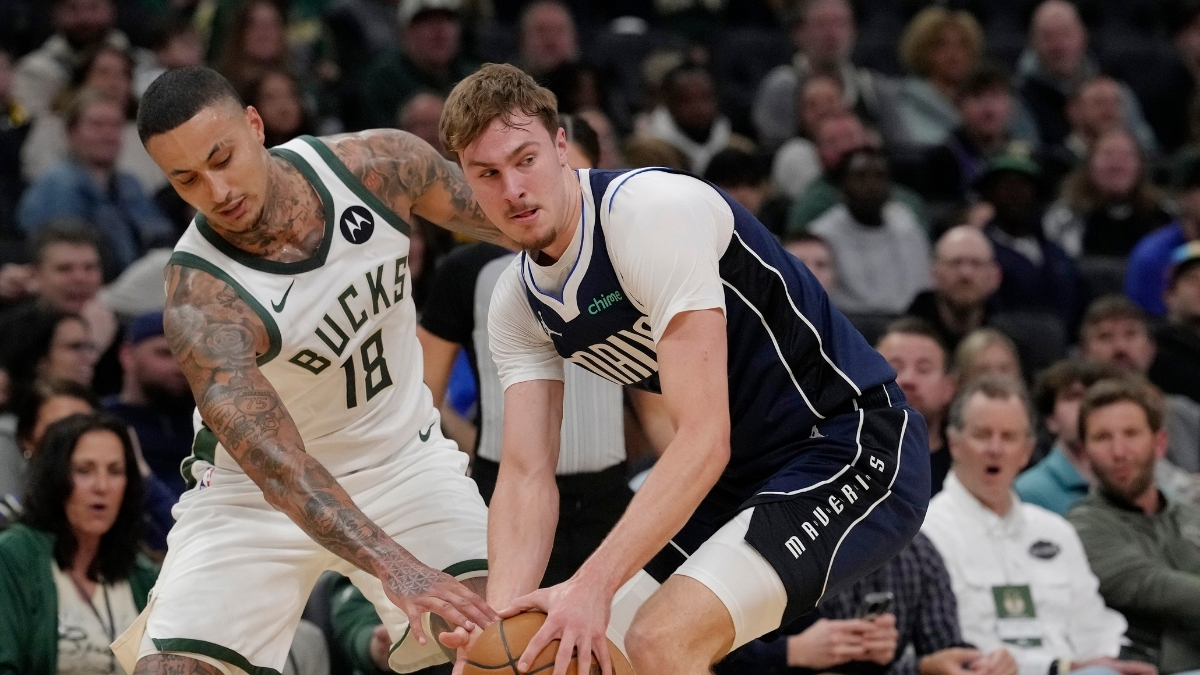
- Injury Fallout: Already missing seven rotation players, the Dallas Mavericks lost Daniel Gafford to a right shoulder stinger in the second quarter, leaving them without a traditional center for the remainder of a 123-99 loss to the Milwaukee Bucks.
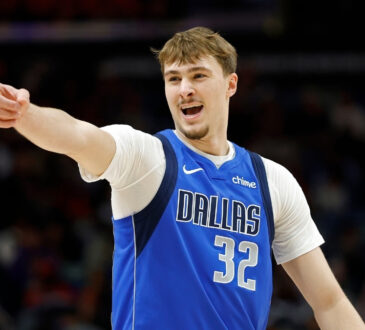
- Rookie Resilience: Cooper Flagg bounced back from a physical outing against Minnesota Timberwolves to post 19 points and 10 rebounds at Fiserv Forum, though the shorthanded roster struggled to find rhythm, shooting just 35.4% from the field.
- Silver Linings: Despite the defeat, two-way standouts Moussa Cissé (8 points, 13 rebounds) and John Poulakidas (11 points, three 3FGs) provided a much-needed lift as Jason Kidd continues to navigate a depleted roster.
MILWAUKEE — A shorthanded Dallas Mavericks team was handed another defeat on Tuesday night, falling 123-99 to the Milwaukee Bucks at Fiserv Forum. The loss dropped Dallas to 24-52 on the season and extended a brutal stretch defined as much by the injury report as the scoreboard.
The Mavericks arrived in Milwaukee already without Klay Thompson, P.J. Washington, Naji Marshall, Marvin Bagley III, Kyrie Irving, Dereck Lively II, and Caleb Martin. Then Daniel Gafford — their only healthy traditional center regularly in the rotation — exited in the second quarter after 11 minutes with a right shoulder stinger and did not return. Head coach Jason Kidd was measured postgame on the severity.
“He didn’t come back. It means that he’s hurt,” Kidd said. “I can’t comment on what it is at this point, but hopefully tomorrow we can give you guys an update on that.”
Ryan Rollins led Milwaukee with 24 points, 7 rebounds, and 9 assists in 35 minutes. Kyle Kuzma added 20 points on 9-of-17 shooting, while AJ Green contributed 17 points and Pete Nance came off the bench for 11. The Bucks shot 20-of-54 from three-point range, a figure Cooper Flagg identified as a defensive concern after the next game.
For Dallas, Flagg led with 19 points, 10 rebounds, three steals, and one block for his 12th double-double of the season. Brandon Williams added 18 points, two rebounds, and six assists off the bench, while Moussa Cissé posted 8 points and 13 rebounds in 22 minutes. John Poulakidas chipped in a season-high 11 points on three made threes in 27 minutes.
Flagg identified the areas the Mavericks must improve on defensively heading into the next game.
“A lot of stuff, but I think just helping each other out, rotating,” Flagg said. “Obviously, we gotta guard the three-point line better. But it starts with just guarding your man, keeping him in front so that we don’t have to get into a lot of rotations.”
A Shorthanded Stand Unravels After Daniel Gafford’s Early Exit
The Mavericks were competitive through the first quarter despite the mounting absences. John Poulakidas hit two three-pointers in the first period to help Dallas stay within seven at 38-31 after one. The Mavericks briefly led by one early in the frame before Milwaukee pulled away.
The second quarter unraveled. Rollins ignited a 14-0 run by drilling back-to-back threes, and the Bucks pushed their lead to 17 before the break. Dallas shot 7-of-24 from the field and 1-of-10 from three in the quarter, turning the ball over five times, which produced 10 Milwaukee points.
Max Christie, who finished with just 3 points on 1-of-12 shooting and 1-of-9 from three in 26 minutes, epitomized the perimeter drought Dallas could not escape all night. Khris Middleton, starting alongside Flagg and expected to provide veteran wing production, managed 8 points on 3-of-11 shooting in 22 minutes — another quiet night from a player Dallas needed more from.
Gafford’s exit midway through the period further complicated the rotation, forcing Kidd to improvise with Moussa Cissé, Tyler Smith, and Dwight Powell.
Dallas trailed 65-51 at the half. Kidd acknowledged the familiar pattern of second-half fadeouts that has plagued the team across back-to-back sets.
“Only being down at halftime by 10, we talked about it against Minnesota — I think we were down 14 and we let the game get away, and the same thing happened tonight in that second half,” Kidd said. “We get a little frustrated because we’ve missed some shots that we normally have made, and we have to be a little bit better on the defensive end. We gave up 20 threes where they attempted 54 of them, so we have to be better there. But I thought early on we were moving the ball. The more that we moved the ball, the better shots we got.”
Dallas Mavericks’ Early Competitive Grit Meets a Depleted Frontcourt Reality
Milwaukee pushed the lead to 23 in the third quarter and never looked back. Gary Trent Jr. and Myles Turner combined to hit five threes in the period as the Bucks pushed their advantage to 90-70 heading into the fourth. The Bucks’ biggest lead reached 31 points late in the final frame.
Flagg’s night was defined less by the final line and more by the context around it. One night removed from a 5-of-19 effort in the 124-94 loss to Minnesota, he was more assertive — getting downhill, attacking the glass, and making plays for others even as the shots didn’t fall consistently. Kidd noted the improvement directly.
“I thought his response was well,” Kidd said. “He had some great looks that just didn’t go down. Again, being able to rebound the ball, he is starting to see bigger players. They’re putting bigs on him now, so for us it’s to help him navigate through that.”
Flagg was candid about the team-wide shooting issues and what it will take to resolve them.
“It’s tough. We just don’t have any rhythm,” he said. “At the end of the day, it’s tough when nobody is in good flow, good rhythm, guys aren’t on the same page. It’s tough to find that and start making shots. It’s not gonna happen overnight, so it’s gonna take a lot of coming together, fighting for each other, and growing in a lot of areas. I think if we’re able to come together and find a little bit of rhythm, it’ll make it easy for everybody.”
Cooper Flagg, Physicality, and the Learning Curve
The back-to-back slate offered Flagg a condensed version of what awaits him in coming seasons. Monday’s physical beating from Minnesota — which held him to 12 points on 5-of-19 shooting while using Julius Randle‘s size and postseason-caliber physicality to disrupt his rhythm — was followed Tuesday by a Milwaukee defense that, while not as brutal, still presented challenges.
Flagg acknowledged that the officiating standard has shifted noticeably as the regular season approaches its conclusion.
“Yeah, I think they definitely started to let more stuff go,” Flagg said. “It gets more physical and obviously you’ve heard that, I’ve heard that — you know that’s to be expected. So it’s not really a surprise. You just gotta find ways to play through it.”
Teams have also begun assigning taller defenders to him, a wrinkle Flagg is actively working through.
“Just gotta use my advantages, find mismatches, and still find ways to attack,” he said.
Kidd framed Monday’s loss to Minnesota not as a failure but as a reference point Flagg will carry forward — and drew a pointed historical parallel to illustrate the value of what his rookie is absorbing right now.
“Last night won’t be looked upon as a big game, but it’s a learning game and a playoff game,” Kidd said. “Unfortunately, he will not participate in the playoffs. But he understands now what Minnesota did last night was all about the playoffs. The physicality and the things they were doing to him — not to hurt him — but the physicality of hitting him as much as they could. That’s something the great ones have all gone through. Talk about MJ [Michael Jordan] against Detroit Pistons.”
Kidd added that Flagg’s track record of absorbing lessons quickly gives him confidence in what comes next.
“He’s one that has gone through any experience one time and then his second time going through it, he’s been successful,” Kidd said. “That game is something he’s going to need to remember as we go forward in his career because we won’t be in the playoffs.”
Doc Rivers, the head coach for the Bucks, offered his own assessment of Flagg’s trajectory — one that touched on the decision earlier this season to give the rookie time running point.
“I think it’s genius that Kidd is doing that, personally,” Rivers said. “That’s not where he’s going to end up. But what it’s going to allow them to do is, when Kyrie Irving comes back, have a secondary ballhandler — and it’s Flagg. That’s just scary to think about. Now you got your advance passes to him, his ability to handle the ball, get downhill, you can see it all changing each game for him.”
Rivers drew a historical parallel of his own.
“People forget, that’s what Doug Collins did with Michael, put him in as a point guard,” Rivers said. “Now, Mike was tough, either way. He doesn’t do it long term. That’s not where he was going. But it was a really good thing for Michael as far as being a scorer and facilitator. And I think it’s going to be the same thing for Flagg.”
Gafford, speaking Monday after the Minnesota loss, captured the broader lesson Flagg is absorbing in real time — one made more poignant now that the center will miss at least the next game.
“It helps him understand how physical it gets around postseason play,” Gafford said of Flagg’s development. “Every night you’re going to have the best defender on you, teams trying to get into your airspace and make everything tough. But it helps because now you know the things you can do — the terminology you can use with bigs or teammates to get guys off of you.”
Moussa Cissé and John Poulakidas Provide a Lift
With Gafford unavailable for the final three quarters, Cissé delivered the most impactful performance of any Dallas reserve. The rookie center finished with 8 points, 13 rebounds, 3 steals, and 2 blocks in 22 minutes — his most consequential outing of the season. Kidd singled him out directly.
“Cissé — his competitiveness, he plays hard on both ends,” Kidd said. “With Gafford being out, I thought he did a good job picking up the slack.”
Flagg echoed the praise.
“Cissé always brings great energy,” Flagg said. “He’s just been big for us all year, coming in and playing with incredible energy.”
Poulakidas was equally impressive in a season-high 27 minutes, finishing with 11 points on 4-of-9 shooting, including three made threes. Kidd highlighted the broader context of Dallas’s two-way depth being tested in real time.
“At one point, we had four two-way players, and some converted to standard contracts,” Kidd said. “So we’re playing with our two-ways a lot. I thought Poulakidas‘s activity was really good. Cissé hasn’t played in a while with us, so for him, I thought he was a positive too.”
The Mavericks also forced 10 steals as a team — a bright spot Kidd credited to sustained defensive activity despite the depleted roster.
“I thought we were active, being able to come up with some steals and then play in transition — that’s something we’ve been successful with,” Kidd said. “Flagg was one that came up with two steals for us. On a back-to-back, to be active like that shows there’s improvement.”
Dallas started Ryan Nembhard, who posted 9 points and 4 assists in 22 minutes and was one of the cleaner ball-handlers on the night. AJ Johnson finished with eight points on 3-of-8 shooting, including two threes, in 16 minutes off the bench. Smith contributed 5 points and 6 rebounds in 19 minutes — solid production for a two-way player thrust into heavy rotation. Powell played nearly 15 minutes, scored three points, and started the second half alongside Williams with Gafford unavailable.
Brandon Williams Continues to Grow
Brandon Williams started the second half and was one of the few Dallas players who looked comfortable generating offense throughout. Kidd used the postgame setting to publicly recognize a growth arc that has been building all season.
“At the start of the season, he was just a scorer, and now he’s one that I think can set the table and run a team,” Kidd said. “Being able to run the pick-and-roll with a big or with Flagg — his speed, being able to get to the rim and cause a problem — not just scoring, but now he’s starting to find his teammates. You can see he’s taking a big jump in being able to do that.”
Williams, speaking after Monday’s loss to Minnesota, broke down his own development in terms that go beyond Tuesday’s box score.
“Just reading the game, taking the defense, pulling the guys aside,” Williams said. “I know me and Ryan talk about it all the time, just about what we’re seeing out there. What can we do more? How can we get guys involved like we talked about with Coop. So just small things out there, especially from a point guard standpoint that not only me and Ryan, but a lot of the guys who are ball handlers kind of see.”
He also credited the coaching staff for shaping how he sees the game.
“I got a Hall of Fame coach,” Williams said. “So, picking his brain, seeing what he sees, and molding it into my game.”
Gafford, for his part, saw Williams’s growth coming and framed it as part of a broader culture of mutual motivation within the group.
“His progression and his growth has been something that I’m pretty sure he holds dear,” Gafford said Monday. “He has a great mentor in Kyrie Irving, and it helps him on a night-to-night basis to see that progression implemented in his game. He’s been staying confident. The sky’s the limit for him.”
Cooper Flagg On Daniel Gafford And The Road Ahead
Flagg addressed Gafford’s exit with evident concern, noting how much the center had elevated his game in recent weeks before the stinger interrupted that momentum once again.
“As he got back healthy again — obviously he started the year with the ankle and was banged up a lot — but over these last month or so, I think everybody has seen how he can impact the game at a high level,” Flagg said. “It’s tough to see him get banged up again, but he is tough. I’m sure he’ll figure it out and fight through it.”
Gafford, who has dealt with a right ankle sprain, illness, and now a second right shoulder injury this season, addressed his mindset after Monday’s game in terms that reflect a resilience built over years of adversity.
“At the end of the day, I’m an NBA player. I’m getting paid to play basketball. I’ve been through seasons like this where we had the ups and downs, the highs and lows, injuries, illnesses — all of the above,” Gafford said. “It’s only so much you can control. The only thing you can control is the energy and effort that you put into the game. I just come in with a smile on my face and keep it pushing. I could be anywhere in the world, but I’m here.”
Dallas has five games remaining. Flagg averages 20.3 points, 6.5 rebounds, and 4.6 assists per game across 63 starts — one of the more historically significant rookie seasons in franchise history — and with five of those final games coming against playoff-bound opponents, the physicality that defined this week is unlikely to relent.
Kidd, for one, would not have it any other way.
“He could see it again,” Kidd said. “He’s one that has gone through any experience one time and then his second time going through it, he’s been successful.”
Up Next
The Mavericks return home to host the Orlando Magic on Friday night at American Airlines Center. Tip-off is scheduled for 7:30 p.m. CT.
More Dallas Mavericks Coverage After Loss to Milwaukee Bucks
- BREAKING: Daniel Gafford Will Not Return Against Milwaukee Bucks With Right Shoulder Stinger
- Klay Thompson Ruled Out For Dallas Mavericks At Milwaukee Bucks Due To Rest
- Dallas Mavericks Face Milwaukee Bucks Shorthanded As Klay Thompson Joins Growing Injury Report
- ‘A Mismatch Nightmare’: How Marvin Bagley III Provided The Structural Engine For The Dallas Mavericks’ Win In Portland
- ‘They Were The Physical Team’: Dallas Mavericks Fall 124-94 To Minnesota Timberwolves As Home Losing Streak Hits 13
- ‘They Were The Physical Team’: Dallas Mavericks Fall 124-94 To Minnesota Timberwolves As Home Losing Streak Hits 13
- ‘He Was Hunting’: How Cooper Flagg Reclaimed Rhythm To Snap Dallas Mavericks’ Skid In Portland
- ‘We Don’t Talk About Rookie Of The Year’: Cooper Flagg And Kon Knueppel Keep Duke Brotherhood Above The Race