Under the CBA, most free agents who signed during the NBA offseason cannot be traded until the later of two markers: three months after putting pen to paper or December 15. Because the vast majority of deals are completed in July, that restriction consolidates into one mass date where dozens of players around the league suddenly become eligible to be moved.
The rule exists to prevent immediate sign-and-flip scenarios, but its practical effect is much more visible: on December 15, the number of players who can legally be included in trades increases dramatically. Overnight, frameworks that were impossible to assemble in November become feasible, and teams with ambitious plans finally have enough matching salary to pursue them.
Why the Date Matters for Trade Talks
The sudden influx of movable contracts is what gives December 15 its reputation. With a larger salary pool available, general managers can start to build the types of multi-player, multi-year packages that are required for most in-season trades. Executives often consider the date the point where their phones begin buzzing more frequently, and where preliminary conversations from November become actual negotiations.
It also creates a pivot point for media and fans. Analysts who were limited to speculative exercises early in the season can now build realistic proposals around players who were previously restricted, leading to a wave of credible reporting and scenario-building that mirrors the action happening in front offices.
Not Every Restriction Ends on December 15
While December 15 is the broad unlock, several exceptions linger beyond that date.
Players who re-signed with their own team using Bird or Early Bird rights and received at least a 20% raise traditionally cannot be traded until January 15. Likewise, free agents who signed after mid-September – such as mid-camp additions or late-market veterans – are subject to the standard three-month wait, meaning some won’t become eligible until later in the season.
As a result, December 15 is significant, but not universal. Every team still has at least a few pieces they must wait another month to move.
What It Means for the Dallas Mavericks
For Dallas, December 15 brings clarity — and flexibility. Three players who signed new contracts with the Mavericks this past offseason become trade-eligible on that date, opening pathways that were previously unavailable to president of basketball operations Nico Harrison.
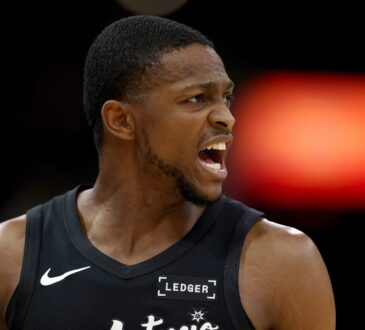
Kyrie Irving becomes eligible after re-signing this summer, making him one of the most influential swing pieces in any hypothetical blockbuster construction. D’Angelo Russell, who joined Dallas in the offseason, also becomes trade-eligible and provides another mid-tier salary that can be paired in multi-player frameworks. Veteran guard Danté Exum joins them on the list, giving Dallas a smaller but still functional contract slot for matching purposes once he is eligible.
Before December 15, the Mavericks were largely limited to longer-term contracts and smaller depth pieces in any exploratory talks. After the date, Dallas can legally build outgoing packages that approximate star-level salary — a prerequisite for engaging in elite-player conversations across the league.
It’s why external reporting has already framed Irving, Russell, and Exum as the Mavericks’ “trade watch” group heading into mid-December. And it’s why, as the calendar flips, Dallas suddenly becomes a far more realistic participant in any serious trade discussions that emerge in the weeks leading up to February’s deadline.
Latest Dallas Mavericks News & NBA Rumors
- NBA Rumors: Kawhi Leonard, James Harden ‘Shocked’ Los Angeles Clippers Moved On From Chris Paul
- NBA Rumors: Buzz Around NBA Is This Will Be LeBron James’ Final Season With Los Angeles Lakers
- NBA Rumors: Luka Dončić Inquired With Los Angeles Lakers To See If They Can Acquire Milwaukee Bucks’ Giannis Antetokounmpo
- NBA News: ‘Super Competitive’: How Ryan Nembhard’s Breakout Stretch Is Rewriting The Dallas Mavericks’ Season
- NBA News: ‘It Was Different’: Dallas Mavericks Handle Miami Heat As Cooper Flagg, Anthony Davis Deliver Late
- NBA News: ‘We Just Kept Fighting’: Anthony Davis, Ryan Nembhard And Cooper Flagg Power Dallas Mavericks’ Comeback Win Over Denver Nuggets